Outdoor Lighting Built for Ontario Weather
A backyard wedding or tent reception lives or dies by two things: ambiance and weather. We handle both.
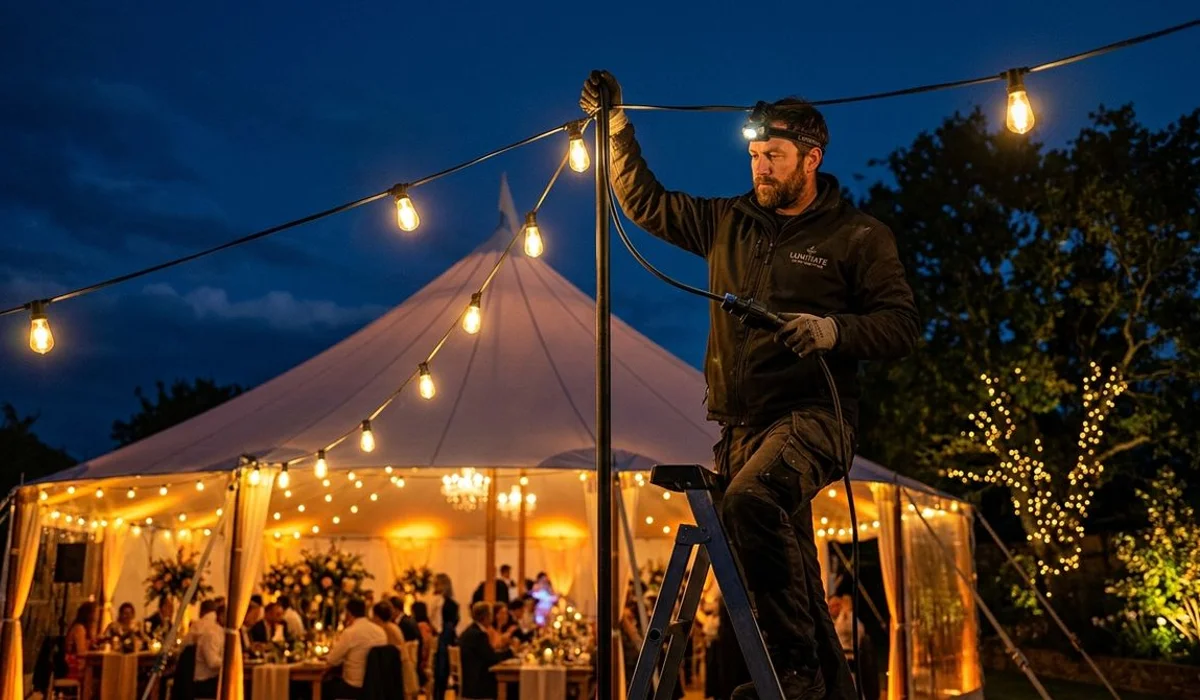
As a full-service event lighting company serving Toronto and the GTA, we design backyard and tent setups from intimate Oakville backyard receptions to large sailcloth tents in Caledon and family parties in Etobicoke. Every setup is built to look magical at golden hour and stay safe if Ontario weather turns.
Backyard and Tent Lighting Setups We Create
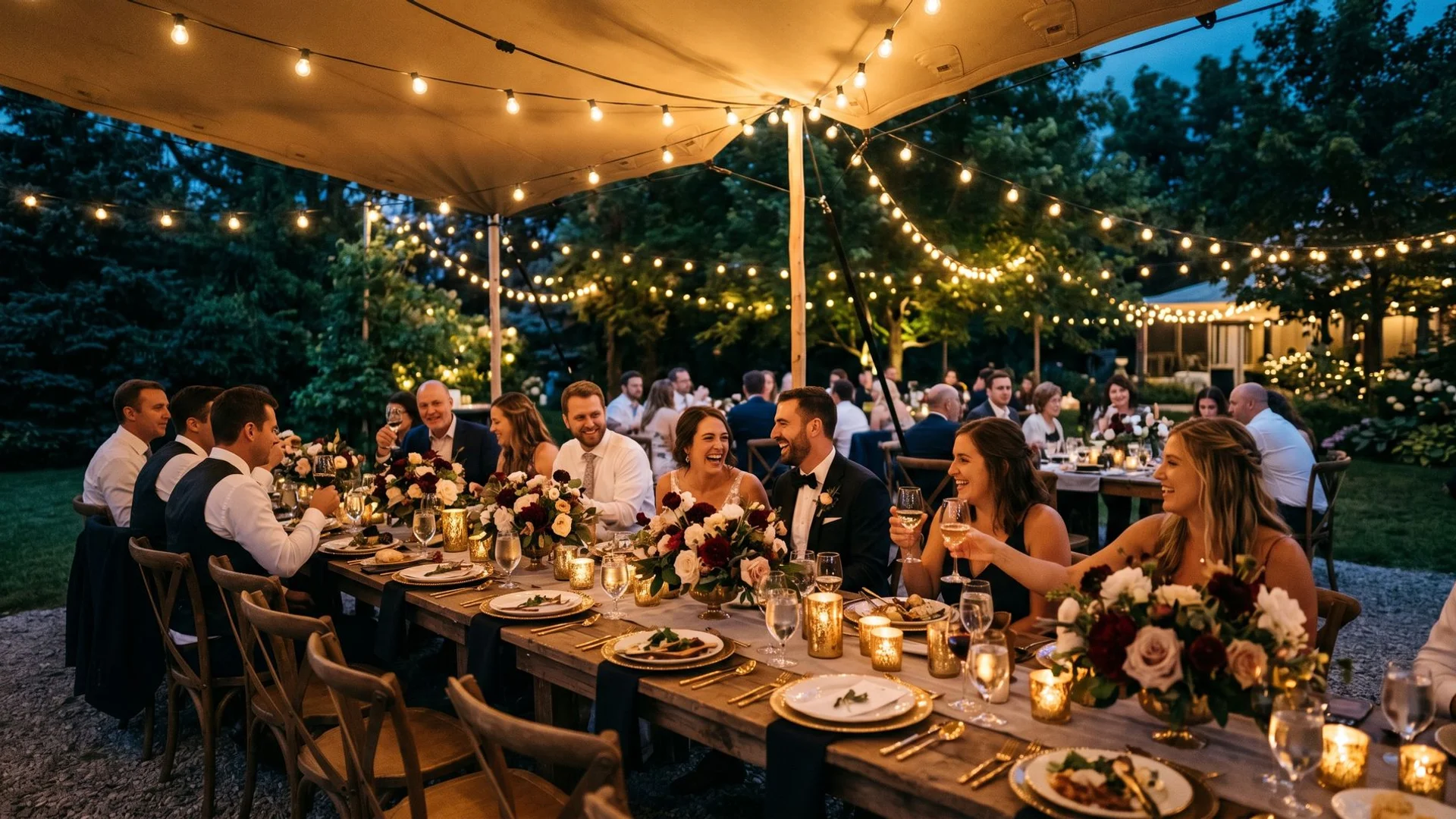
- Festoon and string light layouts: Edison bulbs, warm white, custom spacing
- Tent canopy washes: amber, warm white, or brand-coloured wash across the underside
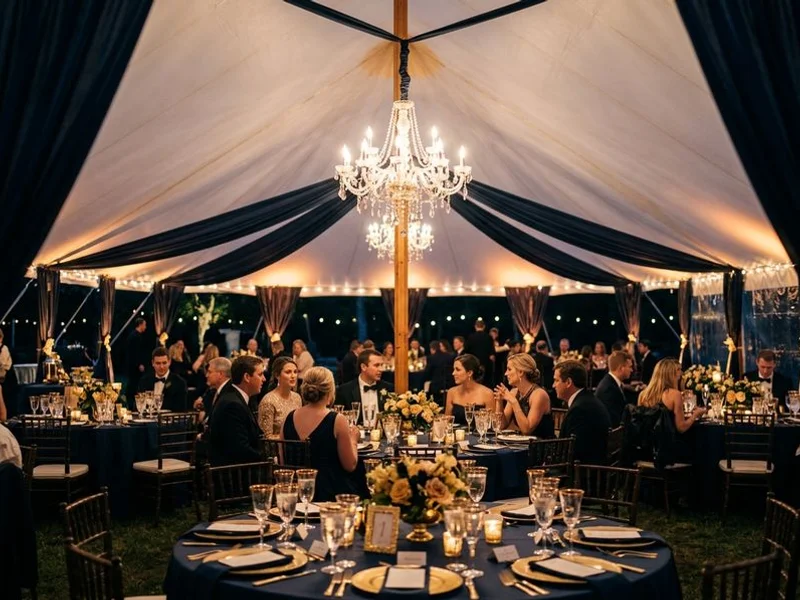
- Chandelier suspension: for sailcloth tents and high-peak structures
- Pin-spotting on florals, cake, and head table: same approach as ballroom weddings
- Focal landscape lighting: uplighting trees, accent lighting on garden features
- Custom power runs: from your home, generator, or shared service
Built for Weather
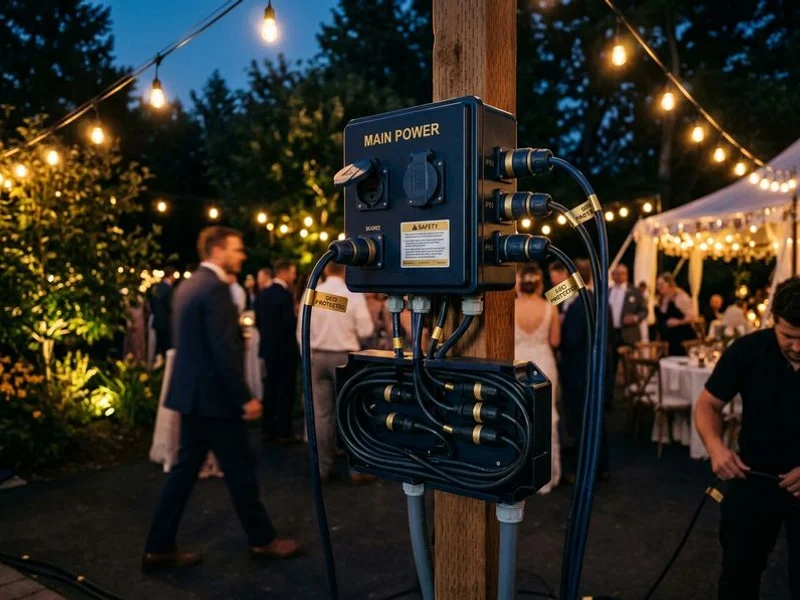
Every outdoor install uses IP65 weatherproof connectors, outdoor-rated fixtures, and GFCI-protected power. We map power runs to avoid walking paths and provide a rain contingency plan in writing before the event.
If a forecast turns mid-week, we adjust, bringing extra weatherproofing, repositioning fixtures for shelter, and coordinating with your tent or rental team. A technician stays through the evening to handle anything that comes up.
Design Coordination
We work alongside your tent rental, florist, and decor team, not as a competing visual layer. We’ve worked with most major tent rentals in the GTA and know which structures take canopy washes, which support chandelier suspension, and which need ground-supported truss instead.
Common Setups
Intimate backyard (under 50 guests): festoon overhead, pin-spotted head table, uplit focal tree. Power from the home with GFCI distribution.
Mid-size tent reception (50–150 guests): canopy wash across the tent underside, chandelier at the peak, festoon over the bar and lounge area, uplighting around the perimeter.
Large outdoor celebration (150+): full tent wash, multiple chandeliers, dance floor pin-spotting, generator power distribution, dedicated technician.
Booking & Lead Time
Book 4 to 6 weeks ahead for peak summer dates (June through September). Earlier for long weekends and holiday weekends, which fill first.
Backyard Party Lighting Ideas That Transform a Space
The difference between a backyard that looks beautiful in photos and one that just has lights in it comes down to layering. A single overhead festoon run produces flat, even illumination - practical but visually uninteresting. Layered lighting uses overhead (festoon), ambient (perimeter uplights), focal (pin-spotting on trees or features), and task (bar and food table illumination) to create depth and visual hierarchy in the space.
For a 40-50 guest backyard ceremony or reception in Etobicoke or Mississauga, the most impactful single element is usually the overhead festoon layout. Edison G40 or ST64 bulbs on a warm 2700K setting, strung at 18-24 inch spacing across a 25-by-30 foot backyard, cast roughly 2-3 foot-candles of warm ambient light at standing height - enough to see faces, not enough to wash out the atmosphere. The layout pattern matters: straight parallel runs give a clean, contemporary look; a radial starburst from a central tree gives a more organic, garden-party feel.
Focal lighting on landscape features is the second highest-impact element. A mature tree with strong branch structure, uplighted from the base with 2-4 warm amber PAR38 ground stakes, becomes a visual focal point that anchors the space. A hedge wall turned into a textured backdrop with a warm wash. A pergola or gate arch turned into a photo opportunity with a fairy-light curtain. These elements don’t require a large fixture count - two or three well-placed accents with strong beams do more than 20 evenly distributed stakes.
The bar and food stations need practical light separate from the ambient wash. Guests need to be able to see the menu cards, pour drinks, and serve themselves without straining. Small directional LED puck lights under a tent bar canopy or a string light specifically positioned over the food table serve this function. A common mistake is to rely on the overall festoon ambient to light these stations - at 30% dimmed for the dancing phase, the food table becomes unlit and guests fumble. Task lighting on the bar and food is a separate circuit on a separate dimmer.
Tent and Canopy Lighting: Warm, Weather-Ready Setups for Ontario Events
Tent lighting is technically different from open-air backyard lighting in one critical dimension: the ceiling is close and fabric-covered, which changes the reflection and diffusion of every fixture inside the tent.
A sailcloth tent at a Caledon property or a clearspan structure at an Oakville estate has a fabric ceiling roughly 12-18 feet above the floor at the peak. Fixtures aimed at that ceiling produce a diffuse reflected wash - warm and soft if the tent fabric is ivory or natural linen, harsher if the fabric is white or synthetic. Chandelier suspension from the tent’s centre peak is the most common premium option: a crystal chandelier on a rigging chain from the peak structural pole creates a focal point and provides both ambient light (bouncing off the tent ceiling) and task light (illuminating the area directly below). Most clearspan and sailcloth tents in the GTA can support a hanging load of 50-150 lbs at the peak, which accommodates most chandelier options.
Canopy wash fixtures mounted at the tent’s perimeter walls and aimed up at the ceiling fabric create the even warm-amber fill that most GTA outdoor events use as their primary ambient source. The colour temperature matters: 2700K on ivory sailcloth produces a warm honey-gold ambiance; 3200K on the same fabric produces a more neutral white. Getting the right fixture and colour temperature right in the design phase prevents the common outcome of a tent that looks clinical rather than warm in photos.
Weatherproofing inside a tent is sometimes overlooked because the tent provides apparent shelter. But Ontario summer weather creates condensation on tent interiors during temperature drops, and any fixture, connector, or power run inside a tent can be exposed to significant moisture. IP44-rated fixtures (splash-proof) are the minimum standard; IP65 fixtures are recommended for any runs that pass through a tent wall or under the tent sidewalls. Power distribution inside a tent should use a proper outdoor-rated distribution box on a GFCI-protected feed, not extension cords from the house. We carry outdoor-rated portable distribution units for exactly this setup on every outdoor tent event across the GTA.
Outdoor Lighting Power and Weatherproofing Basics: GFCI and IP Ratings Explained
For outdoor event lighting in Ontario, two specifications matter above everything else: GFCI protection and IP ratings. Understanding both lets you evaluate any outdoor lighting setup - or any outdoor lighting quote - on its actual safety merits rather than on appearance.
GFCI (Ground Fault Circuit Interrupter) protection monitors the current flowing out of a circuit and compares it to the current returning. If there’s a difference of 5 milliamps or more - indicating that current is leaking to ground, potentially through a person - the GFCI trips in 1/40th of a second. This is fast enough to prevent electrocution in a wet outdoor environment. The Ontario Electrical Safety Code requires GFCI on all outdoor outlets with ground contact or wet-location risk. For event lighting setups, every outdoor power outlet - whether house-based or from a generator - should be GFCI-protected. Daisy-chaining from an indoor non-GFCI outlet through a window is an ESA violation and a real hazard.
IP (Ingress Protection) ratings classify how well a fixture or connector resists solid particles and liquids. The two-digit code (IP44, IP65, IP67) means: first digit is dust and solid protection (0-6), second digit is moisture protection (0-8). IP65 is the key outdoor event standard: fully dust-tight (digit 6) and protected against low-pressure water jets from any direction (digit 5). This rating covers rain, mist, hose wash-down, and condensation. IP44 covers splashing water from any direction but not a direct jet stream - adequate for covered tent interiors but marginal for exterior-mounted fixtures. IP67 adds submersion capability and is common in festoon cable connectors used in ground-level applications.
For specific GTA outdoor event risks: summer thunderstorms are the primary immediate weather hazard and require IP65 minimum on all exterior fixtures and connectors. Early fall or late spring events in Etobicoke and Scarborough face condensation risk from temperature swings between afternoon setup and evening use. Overnight setups - wedding house displays that run 3-4 days, corporate campus installations that stay up for a week - face repeated rain cycles and should use IP65 or higher on every exterior element.
Renting vs. Buying Outdoor Event Lighting: The Real Comparison
For homeowners considering a backyard event lighting setup, the rent-vs-buy question comes up consistently. The arithmetic looks straightforward: if a professional rental setup costs $800-$2,000 per event and a comparable fixture set costs $1,000-$2,000 to purchase, shouldn’t you buy after the second event?
The answer depends on what you’re actually comparing. A purchased consumer festoon string from a hardware store costs roughly $30-$80 for a 10-metre run of G40 Edison bulbs. A commercial-grade festoon string of the same length, rated to IP44 or IP65, using commercial E26 sockets and 16-AWG SPT-2 wire, costs $150-$300. The professional rental kit includes the commercial-grade fixtures, but it also includes the design, the installation, the power mapping, the weatherproofing, and the on-site technician who stays through the event. Buying the commercial-grade fixtures is the halfway point - you own better equipment, but you still need to install it safely, design the layout, and troubleshoot anything that goes wrong during the event.
The practical comparison for most GTA backyard event scenarios: a one-off celebration (birthday, retirement, anniversary) sees renting with professional install make financial sense and produce a better result than a rush fixture purchase. Annual events on the same property may see purchasing become more cost-effective over 3+ uses if the homeowner is genuinely comfortable with outdoor electrical requirements, IP ratings, and proper load management. The hidden cost of DIY or purchased setups is time: sourcing correct fixtures, planning the layout, running safe power, setting up and taking down. For a 6-hour backyard party, that can represent 8-12 hours of setup and teardown work. Professional rental pricing includes all of that time in the service fee.
Related Questions Toronto Homeowners Ask About Backyard and Tent Lighting
How much does backyard event lighting cost in Toronto?
Backyard event lighting quotes depend on yard size, fixture count, and whether a generator or tent is involved. A 40-50 guest intimate backyard setup with festoon overhead, 4-6 uplights, and basic power from the home typically falls in the low-to-mid hundreds. A 150-200 guest tent or sailcloth event with chandelier, canopy wash, and pin-spotting is a larger investment. All setups are custom-quoted after a property or virtual site visit.
Can you match the lighting to our party theme or colours?
Yes. Wireless battery-powered uplights are RGBW-capable and can be dialled to any colour. Warm white festoon is the default, but amber, rose gold, and other warm tones are achievable through bulb selection and gel filters. Colour-coordination with the florals and decor team is a standard part of our design process.
What if my backyard doesn’t have many outdoor outlets?
Power mapping is part of every site visit. We assess your home’s available circuits, recommend GFCI protection where it’s missing, and if the load exceeds household capacity, we bring a portable generator sized to the event draw. Power is never a reason to underdeliver on the design.
Do you work with tent rental companies?
Yes. We’re familiar with most major tent rental companies in the GTA and know the structural specifications for most clearspan and sailcloth tent styles in use across the GTA, including chandelier rigging load limits and sidewall anchor points for perimeter fixtures.
How early should we book for a summer backyard event?
Peak summer backyard dates (June through August weekends) should be booked 6-8 weeks ahead. Long weekends, especially the June and August long weekends, book fastest and should be reserved 8-10 weeks in advance. Spring and fall backyard events (May, September, early October) have more availability on shorter notice, typically 3-4 weeks ahead.