When Off-the-Shelf Isn’t Enough
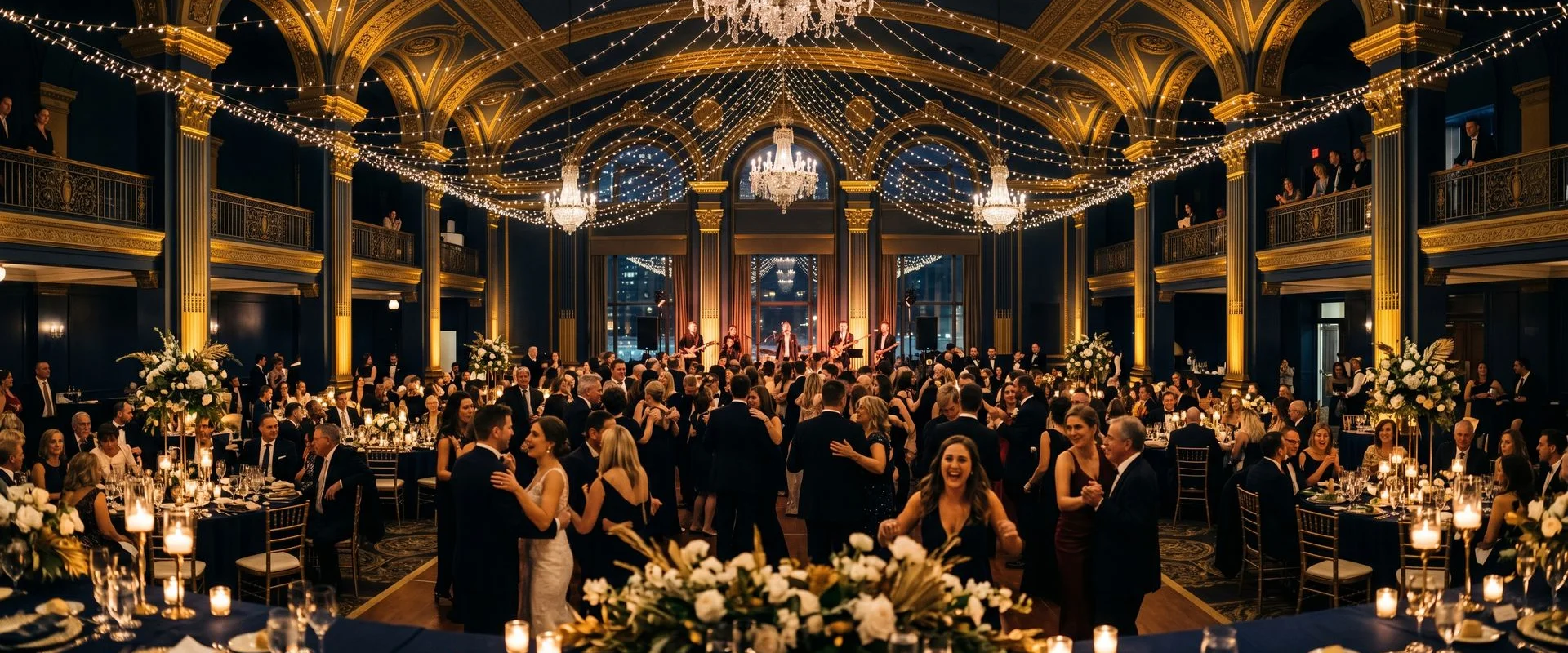
Some events need a moment that doesn’t exist anywhere else. A tunnel entrance that becomes the talk of the night. A pixel-mapped ceiling sequence that drops during the keynote reveal. A freestanding chandelier in a venue that bans ceiling rigging.
That’s where this service lives. As Toronto’s custom event lighting specialists, we design installations from scratch, engineered for your specific venue, fabricated to your specific vision, and run live by our team.
Custom Light Tunnel and Installation Designs
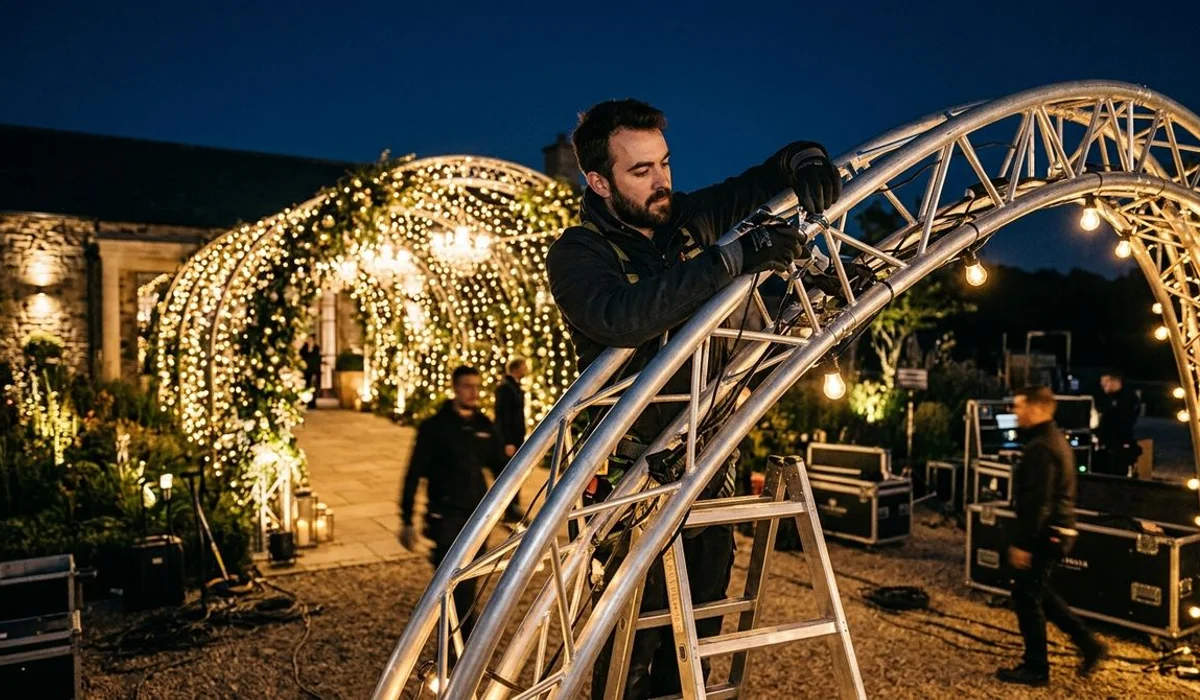
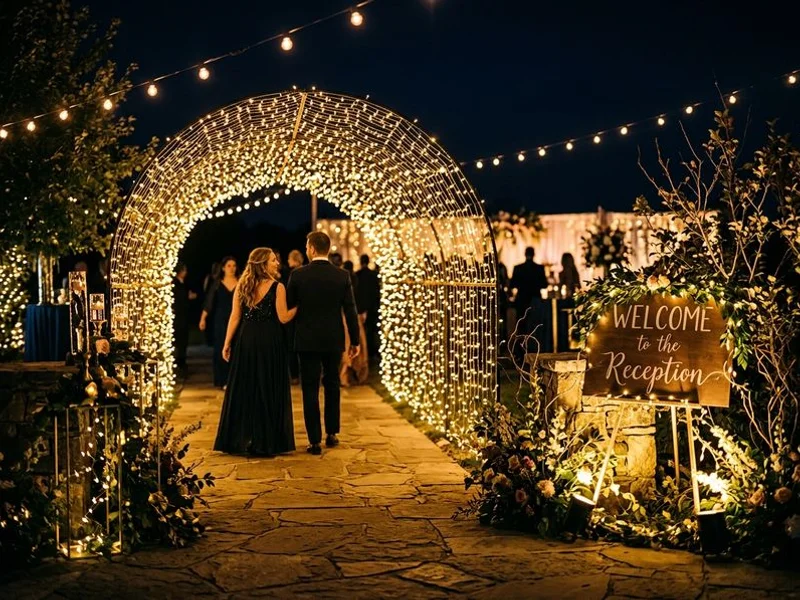
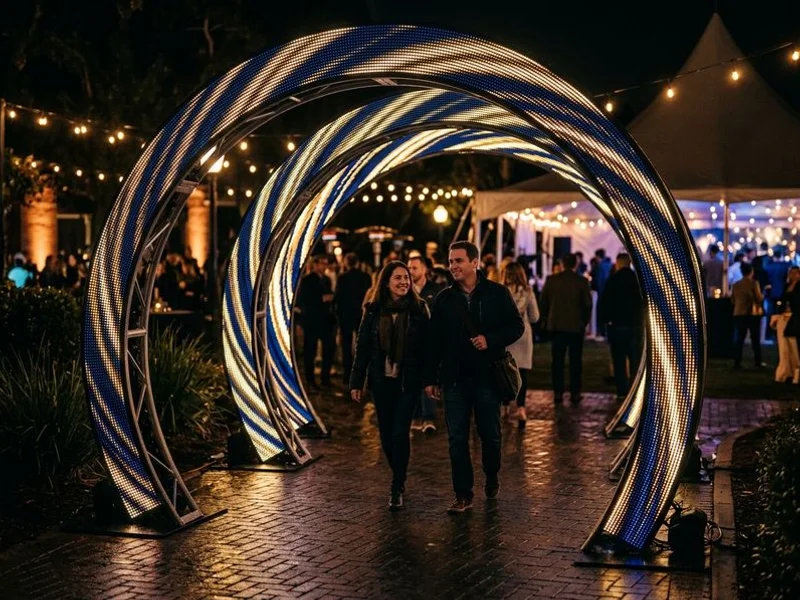
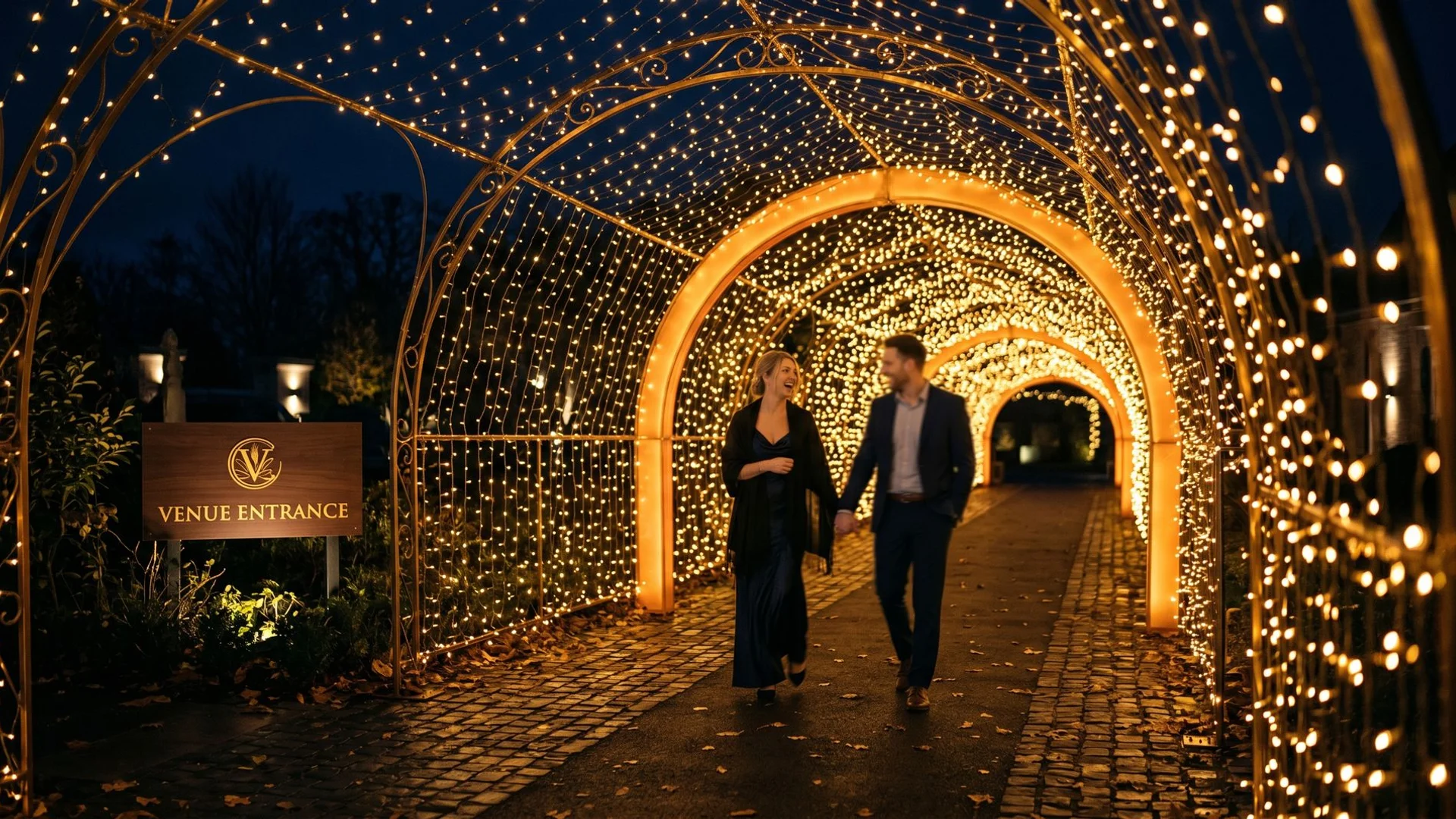
- Light tunnel entrances: aluminum arch trusses wrapped in fairy lights or pixel-mapped LEDs, creating immersive walkthrough experiences for arrivals
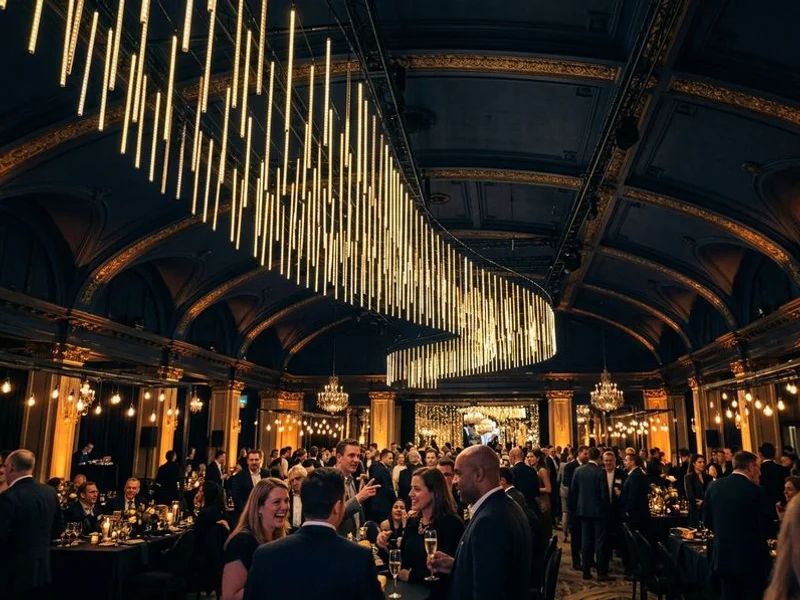
- Pixel-mapped LED arrays: addressable LEDs programmed with cascading sequences, motion patterns, and music-synced animations
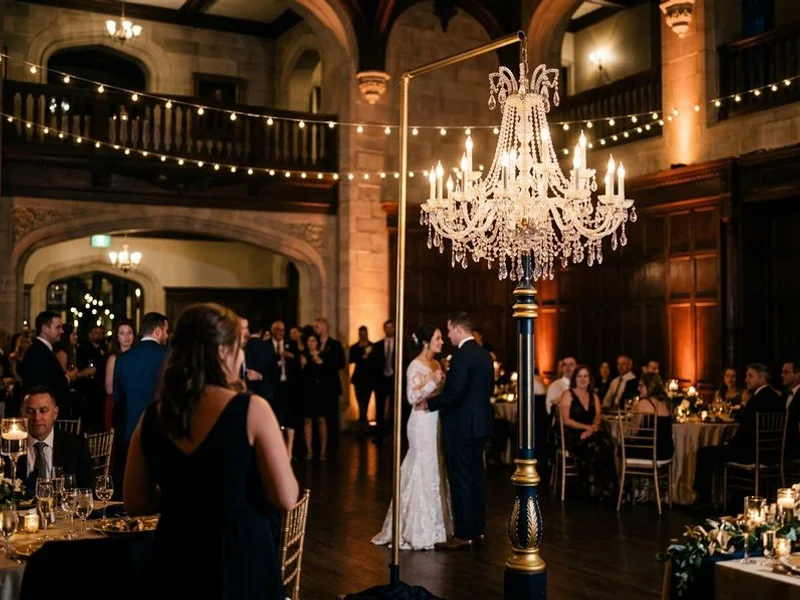
- Freestanding crystal chandeliers: for restricted-rigging venues like Casa Loma and Liberty Grand
- Custom structures: totem trusses, ground-supported arches, branded sculptural pieces
- Architectural accent lighting: uplighting columns, washing facades, accenting venue architecture
- One-of-a-kind installations: designed for a single event, fabricated, installed, struck
Pre-Visualization Before You Commit
DMX cues and pixel-mapping sequences are pre-programmed and pre-visualized so you see the show before install day. No surprises, no “we’ll figure it out on the night.”
Rigging-Free Specialty
A growing list of premium GTA venues (Casa Loma, Liberty Grand, heritage halls, museums) don’t allow ceiling rigging. We’ve designed freestanding alternatives for all of them:
- Crystal chandeliers on freestanding poles
- Totem trusses as visual focal points
- Ground-supported arches that don’t touch the ceiling
- Modular drape and lighting structures that meet load-bearing requirements
You get the dramatic high-end look without putting the venue at risk.
Booking Lead Time
- 8–12 weeks for fully bespoke fabrication (custom arches, branded structures, sculptural pieces)
- 4–6 weeks for tunnel entrances and pixel-mapped shows using existing inventory
- 2–4 weeks for freestanding chandelier and rigging-free options
How to Start
Send us your concept, venue, and event date. We respond within one business day with a discovery call, a sketch, and an initial quote range. From there, the design process is collaborative - we refine until it’s exactly what you pictured.
How a Lighting Tunnel Entrance Is Designed and Built
A light tunnel entrance is the most technically complex single structure in event lighting - more demanding than a chandelier install, more engineering-intensive than a full uplight rig. Getting it right requires understanding structural load, LED pixel density, viewing angles, and event flow logistics simultaneously.
The structure starts with aluminum box truss or arch truss, typically 300-400mm box section rated for the combined dead load of the fixture array plus any decorative elements (drapery, foliage, fabric wraps) plus wind load if the structure is outdoors. Arch trusses are curved to create the tunnel profile and typically require custom fabrication for non-standard spans; box truss tunnels with vertical sides and a flat top are more common for indoor installs and can be assembled from standard inventory. A 2.4-metre-high, 1.2-metre-wide, 6-metre-long tunnel entrance uses approximately 24 linear metres of truss structure, eight to twelve ground support baseplate assemblies, and 180-220 kilograms of total live load capacity before any fixtures are attached.
Pixel-mapped LED tubes are the current standard for high-end tunnel lighting in the GTA. An addressable RGBW tube contains 30-60 individually controlled LED pixels per metre, each independently colour-programmed via a pixel controller. A 6-metre tunnel with 120 tubes of 2-metre LEDs contains approximately 21,600 individually addressable pixels - enough resolution to run cascading animations, starburst sequences, and music-synced full-colour shows. The control infrastructure (pixel controller, DMX distribution, power supply distribution) is as complex as the structural element and needs to be planned in the pre-fabrication stage.
Guest flow is the third design variable. A tunnel entrance that looks spectacular in photos can become a bottleneck for 200+ guests if the entry point is too narrow or the tunnel is too long. The standard guideline for GTA event tunnel design is a minimum 1.2-metre clear walkthrough width for up to 150 guests, 1.5-metre clear width for 150-300 guests. Tunnels longer than 8 metres need secondary emergency exit planning if they’re part of a code-regulated space. Every tunnel we design incorporates a flow simulation for the guest count before fabrication is committed.
Custom Bespoke Lighting: From Concept to Installation
Bespoke custom lighting is what happens when no existing product or inventory solution fits the event vision. It’s a design and fabrication process, not a rental and install process, and it changes the timeline, the cost structure, and the deliverables in ways that differentiate it from standard event lighting.
The bespoke process begins with a concept brief. This might be as specific as “a 6-metre floral arch with integrated warm fairy lights and a 1.5-metre RGBW halo at the peak” or as open-ended as “a moment of visual surprise at the entrance.” From the brief, the design team (lighting designer plus structural engineer for load-bearing elements) produces a concept render using Vectorworks or SketchUp. The render shows the physical structure, the fixture placement, the light cone projections, and how it interacts with the venue ceiling and walls. Client sign-off on the render is the trigger for fabrication.
Fabrication lead times depend on the complexity of the structure. Aluminum arch trusses and standard structure are available in 1-2 week lead times from GTA metal fabricators. Custom LED pixel arrays need 2-3 weeks for component sourcing and pre-wiring. Custom decorative elements - cut acrylic panels, branded sculptural pieces, large-scale fabric forms - run 3-8 weeks depending on the fabricator’s queue. A fully bespoke installation with all custom elements requires an 8-12 week window from brief to install-ready delivery.
The installation itself for a bespoke piece is a production event, not just a setup task. A crew of 4-6 installers for a full-day load-in, following a pre-planned assembly sequence that has been rehearsed in advance. Power, rigging, and structural anchoring are all mapped against the venue’s load documents before the crew arrives on-site. The staging rehearsal prevents the kind of in-front-of-the-client surprises that happen when a structure is assembled for the first time on event day.
Pixel Mapping and DMX-Controlled Custom Light Shows
Pixel mapping is the highest-resolution visual tool available in event lighting - and one of the most misunderstood terms in the GTA event industry. Understanding what it actually means helps clients brief the right scope and evaluate quotes accurately.
Standard LED strip lighting is non-addressable: all LEDs on a strip change colour simultaneously via a single DMX channel. An addressable (pixel-mapped) LED strip has each LED - or small group of LEDs - assigned its own pixel address, meaning each one can be controlled independently. This enables cascading effects (a wave of colour that appears to move along the strip), starburst patterns that originate from a specific point, sequential reveals, and music-synced animations where the lights respond to beat analysis of the audio track. Applied to a custom tunnel entrance with 120 LED tubes, the result is a fully animated light corridor rather than a static colour wash.
Control infrastructure is the second requirement. A pixel-mapped installation requires a pixel controller separate from the main DMX controller. The pixel controller (Madrix, Resolume Arena, or similar) runs the pixel-specific programming and outputs Art-Net or sACN protocols to the individual pixel universes. A DMX console controls the overall show structure - scene changes, intensity masters, colour zones at the macro level - while the pixel controller handles the micro-level animation within each addressable zone. Both need to be programmed and synchronised before load-in.
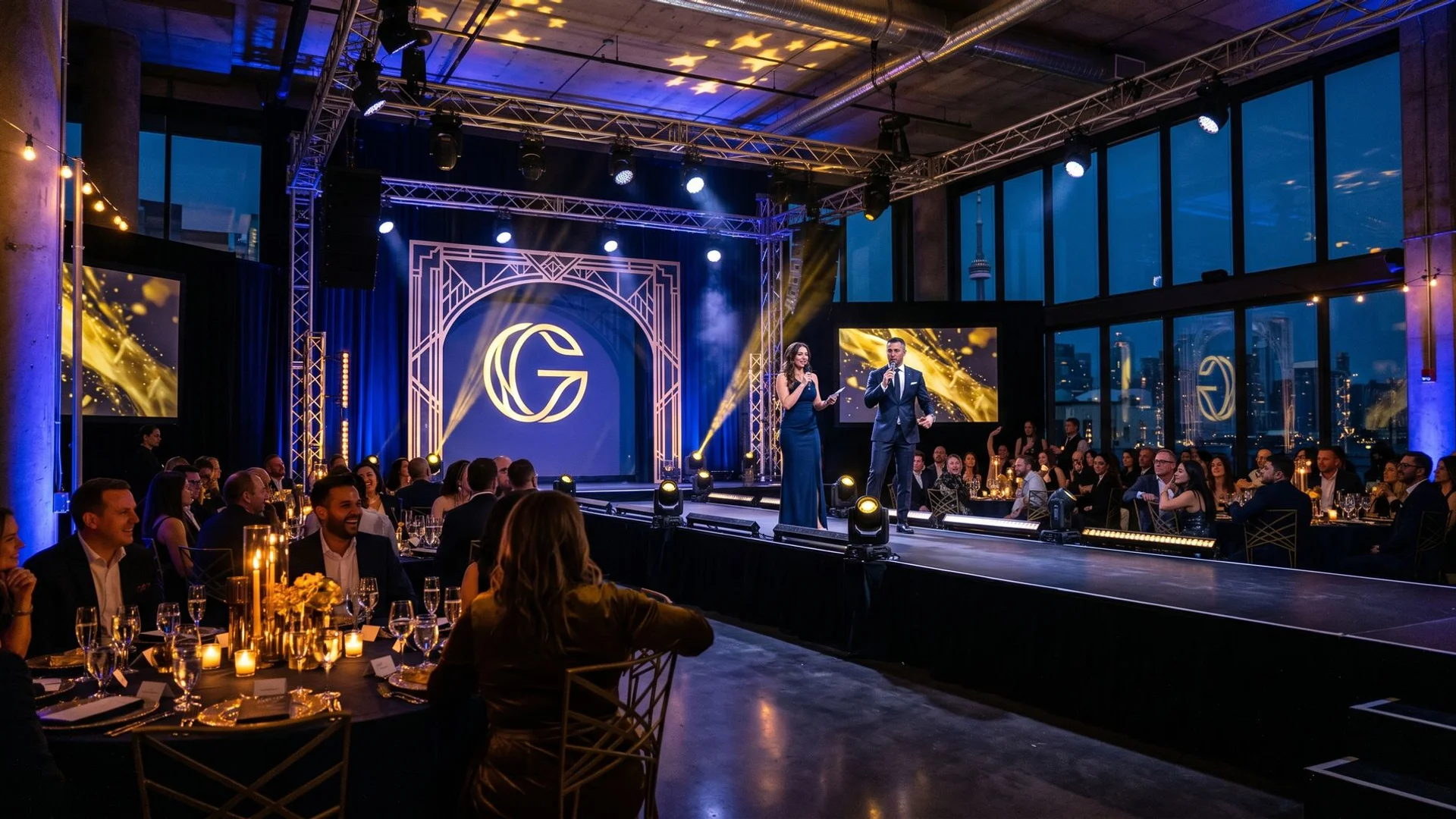
Pre-visualization and show rehearsal are standard practice before any pixel-mapped show. This means creating a 3D model of the installation in Capture, Depence, or WYSIWYG, assigning the virtual pixel positions to match the physical layout, and running the show in simulation so the client can review the animation, timing, and colour palette before committing to an install. The pre-viz session is typically done 2-3 weeks before the event, with client feedback incorporated into the final show file before load-in. This is how we avoid missed cues and last-minute surprises at events where there’s no rehearsal on the actual night.
Freestanding Chandeliers and Rigging-Free Setups for Restricted Venues
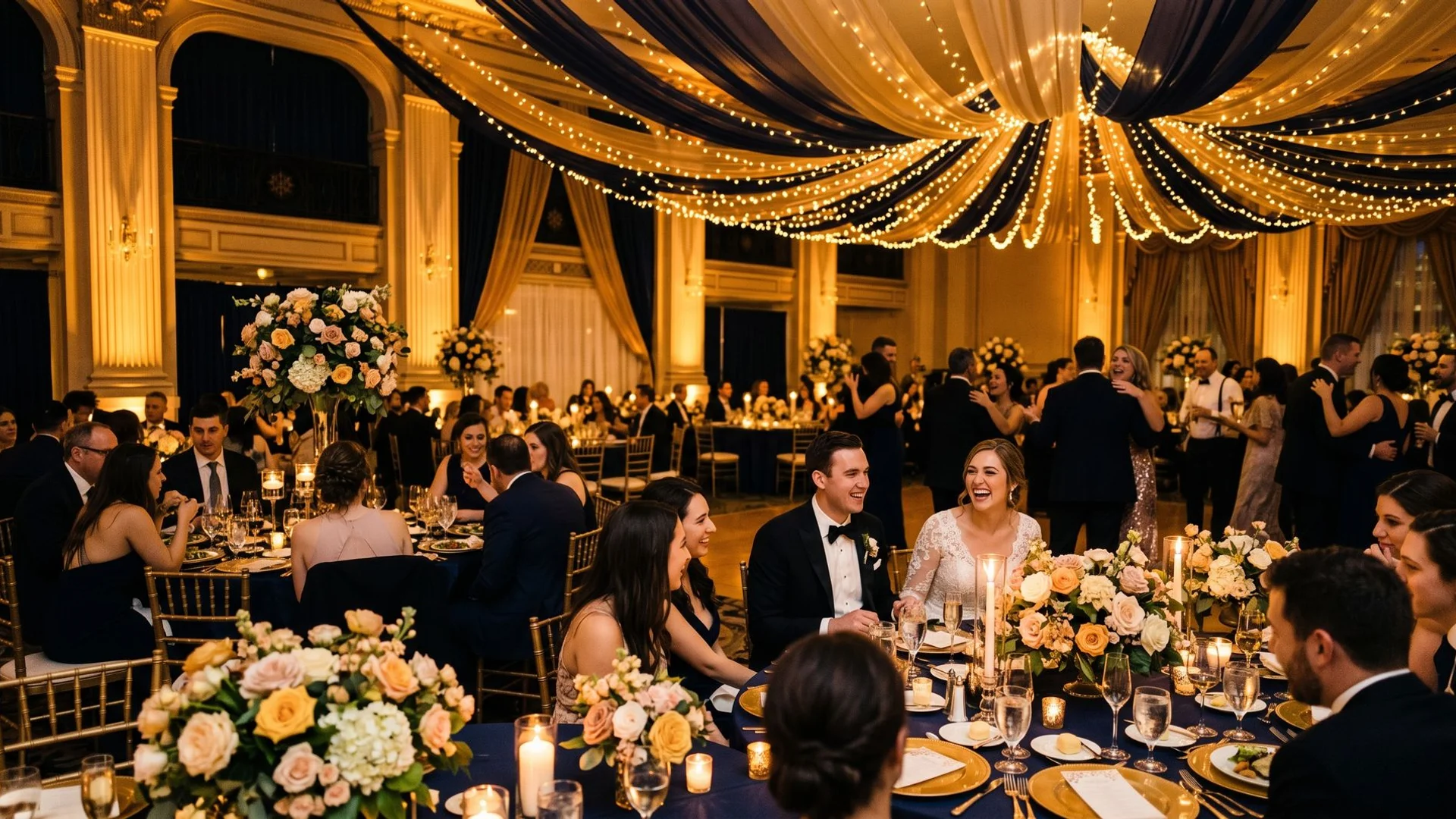
The list of premium GTA event venues that prohibit ceiling rigging is longer than most planners expect. Casa Loma’s heritage roof structure prohibits loads above the ceiling line. Liberty Grand’s ballroom ceiling has defined anchor points with strict load limits per point. Several heritage venues in downtown Toronto, the Distillery District, and the Annex have conservation restrictions on any penetration into ceiling or wall surfaces. For these venues, the ceiling-hung chandelier - the default choice for high-end event lighting - is simply not available.
Freestanding chandeliers are the solution. A freestanding chandelier consists of a crystal or fabric chandelier suspended from a purpose-designed vertical mast on a ballasted base. The mast is typically 3-5 metres tall (adjustable), the base is weighted (typically 50-100 kg of ballast plates) to prevent tipping, and the chandelier hangs from a hook at the mast peak. The visual effect is identical to a ceiling-hung chandelier - the base is hidden by skirting or tableside decoration. Weight capacity varies: our standard freestanding chandelier system handles chandeliers up to 25 kg; larger custom chandeliers require heavier base systems rated to 40-60 kg.
Totem truss structures are the freestanding alternative for larger-scale visual elements that would normally require a ceiling hang point - aerial lighting fixtures, moving heads, follow spot positions. A totem truss is a vertical truss tower (typically 3-6 metres tall) on a weighted base, used as a free-standing rigging point for fixtures. Two or four totem trusses flanking a stage or dance floor can carry the equivalent fixture load of a 10-metre ceiling traverse truss, achieving the same visual coverage without any contact with the venue ceiling. They are the standard solution for corporate events at venues across the Vaughan banquet corridor and for any setup at the Fermenting Cellar in the Distillery District.
Related Questions About Custom and Tunnel Lighting in Toronto
How long does it take to install a light tunnel entrance?
A standard tunnel entrance using existing aluminum arch inventory and fairy-light wrap takes 3-4 hours to install with a two-person crew. A pixel-mapped tunnel with custom structure requires 6-8 hours for a 4-person crew. The pre-fabrication and staging work happens off-site in the days before load-in; what arrives on the event day is an assembly sequence, not a build-from-scratch operation. Strike (removal) after the event is typically 1.5-2 hours.
Can you build a custom arch for our specific venue ceiling height?
Yes. Custom aluminum arch fabrication is a standard part of our bespoke service. We fabricate to the required rise height, span width, and structural rating for your specific venue ceiling and anticipated fixture load. Fabrication lead time for a custom arch truss is typically 2-3 weeks from dimension approval.
What venues in the GTA allow rigging-free structures?
All venues allow freestanding structures that stand independently without any contact with the building structure. Our freestanding chandelier and totem truss systems are compliant at every GTA venue, including those with the strictest rigging restrictions. We’ve used freestanding solutions at Casa Loma, Liberty Grand, the Fermenting Cellar, and various heritage halls throughout Toronto.
Can pixel-mapped lighting sync to a DJ’s music?
Yes. Beat-sync animation in Madrix and Resolume Arena analyses the audio signal from the DJ or audio system and triggers pixel animation on the detected beats. For programmed shows with a pre-set cue sheet, we time-code cues to specific moments rather than using live beat-detection - this is more reliable for production events where precise timing matters.
Do you work on residential custom projects?
Yes. Residential bespoke lighting projects - custom arches for home celebrations, large-scale fairy-light installations for South Asian wedding houses in Brampton and Mississauga, bespoke garden lighting structures - are a regular part of our work. Residential bespoke projects start at the same 4-6 week lead time as event tunnel work, with 8-12 weeks for fully custom fabrication.