Lighting That Makes the Brand the Hero
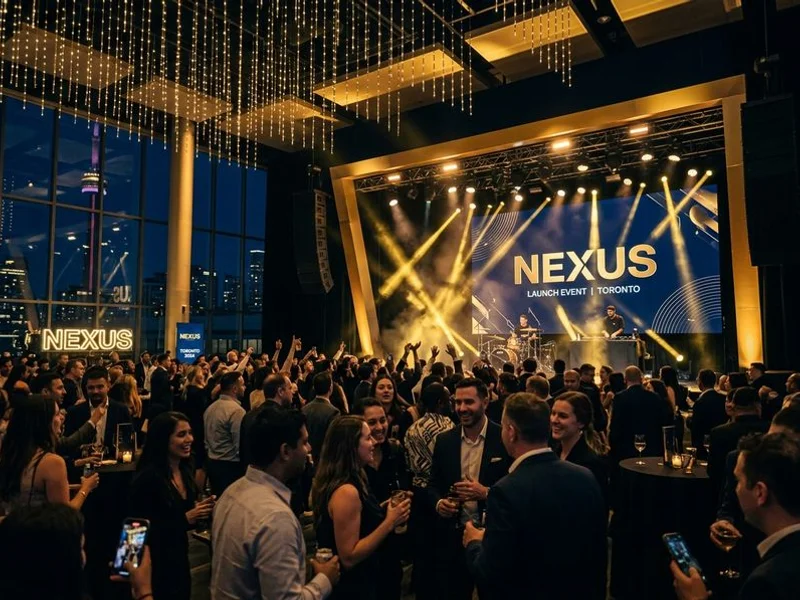
A corporate event is a brand story told in a room. The colour temperature, the keynote spotlight, the logo on the wall, the rhythm of the after-party wash. All of it either reinforces the brand or quietly undermines it.
We design corporate event lighting across Toronto and the GTA for the moments that matter: product launches, annual galas, summits, brand activations, conference keynotes, office holiday parties. Trusted by Amazon, Mazda, and dozens of others who can’t afford a lighting mishap at a high-stakes event.
Corporate Event Lighting Capabilities
- Brand-calibrated ambient washes: exact Pantone matches on uplights and wash fixtures
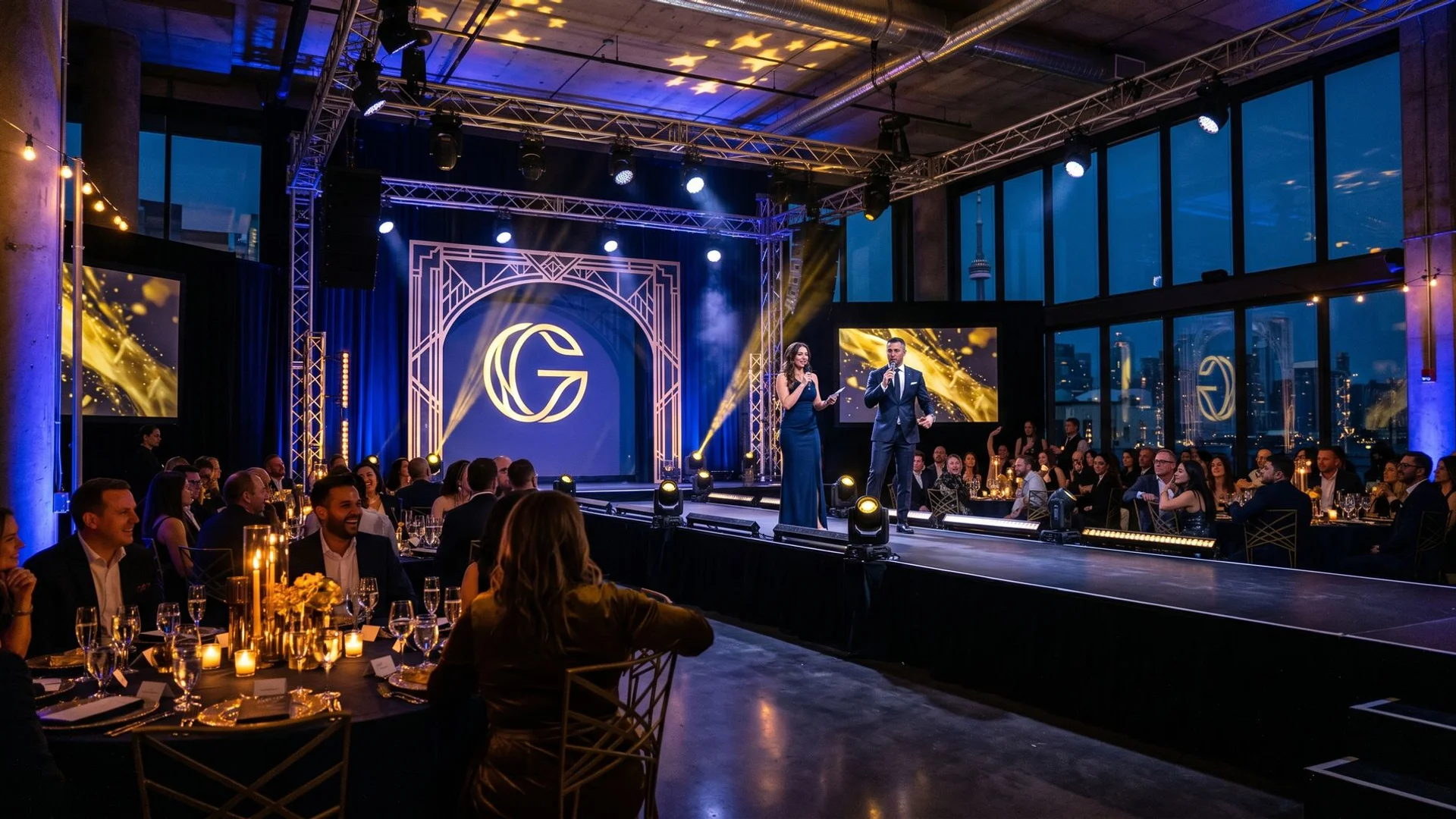
- Custom logo and monogram gobo projection: onto stages, walls, or dance floors
- DMX-programmed light shows: pre-visualized, music-synced, run live by a technician
- Moving head profiles and ellipsoidal spotlights: for keynote moments and product reveals
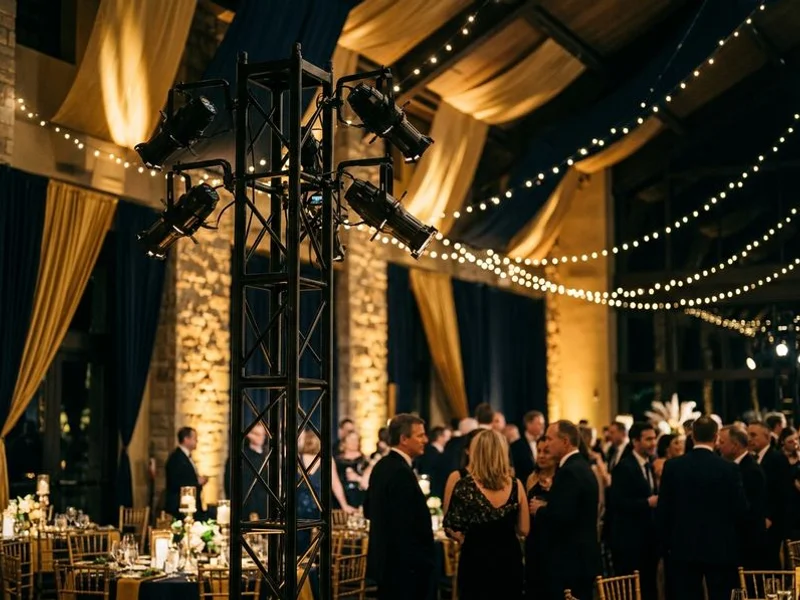
- Totem truss and ground-support structures: for venues that ban ceiling rigging
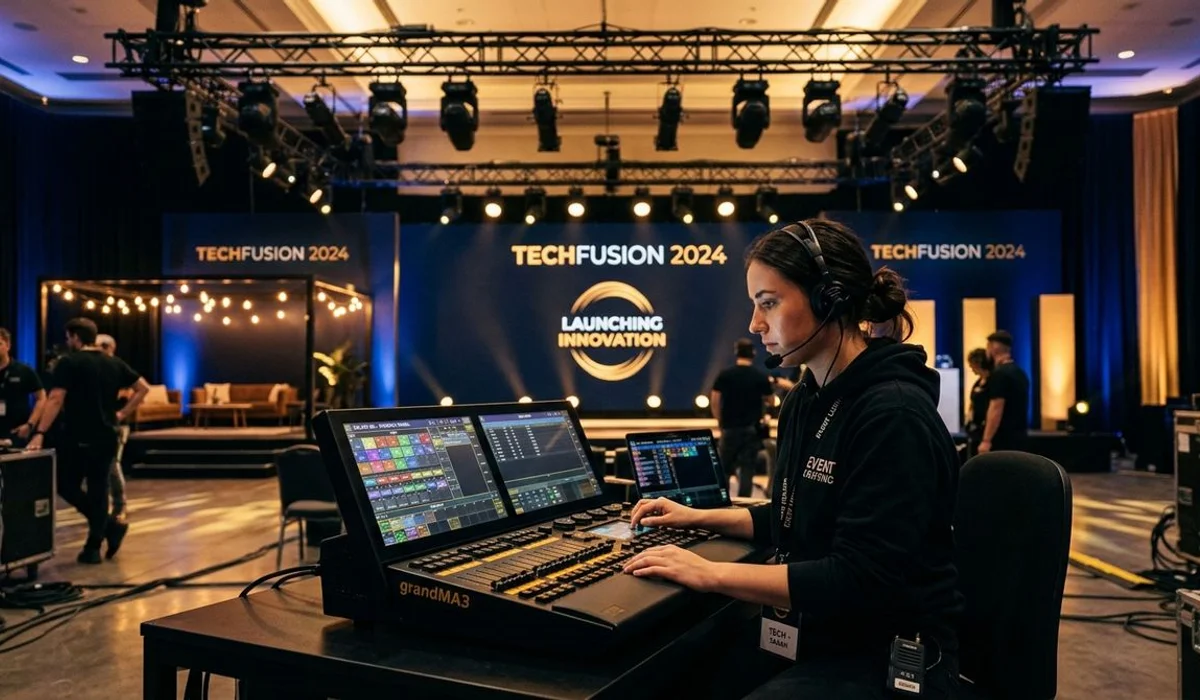
- Live booth operation: a dedicated technician runs cues and troubleshoots in real time
Professional Equipment and Industry Standards
Chauvet Professional and Elation Professional fixtures, DMX-controlled. High CRI (colour rendering index) so brand colours photograph accurately. ESA-compliant power and rigging. Rigging-free truss options for venues like Casa Loma and Liberty Grand that restrict ceiling work.
Why Brands Trust Us
The reason Amazon books us for tech summits and Mazda books us for product launches isn’t just the fixtures. It’s the operation. The DMX cues are programmed in advance, pre-visualized, then run live by a technician who’s seen the show in rehearsal. If something needs to change mid-event, it gets changed mid-event. No “we’ll fix it for next time.”
Toronto and GTA Corporate Venues We Work With
- Liberty Grand
- Casa Loma
- Markham Convention Centre
- Pearson Convention Centre
- Paramount EventSpace
- Chateau Le Jardin
- The Fermenting Cellar
- Steam Whistle Brewing
- And every major banquet venue across the GTA
How We Quote
Send us the event date, venue, expected guest count, and the brand brief or palette. We respond within one business day with a discovery call and quote. For complex programming or large-scale rigs, we’ll book a site visit before finalizing.
Lighting Design for Product Launches and Brand Activations
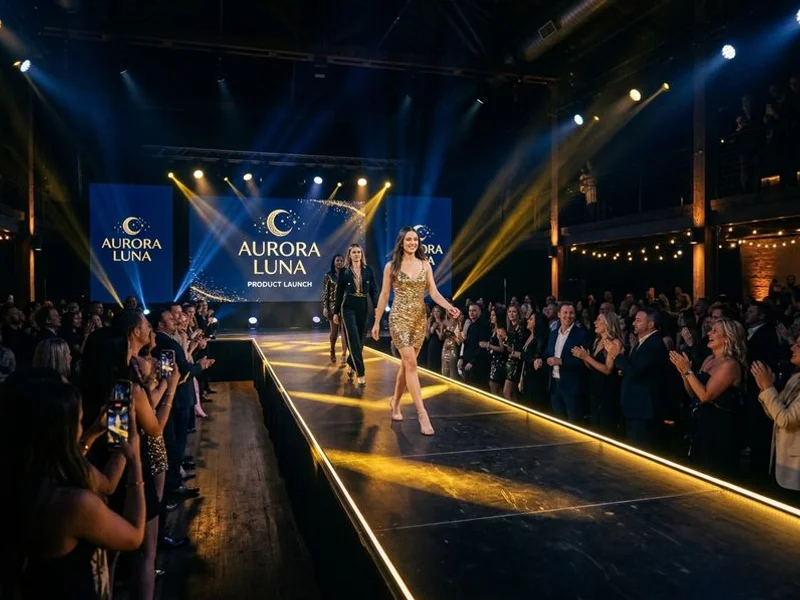
A product launch is the highest-stakes single event in most brands’ calendars. The lighting design isn’t decoration - it’s a production element that either elevates the reveal or dilutes it. The difference between a launch where guests lean in and one where they check their phones during the reveal is often the quality and precision of the lighting cue in that specific moment.
For product launches at venues across Toronto and the GTA - the Steam Whistle Brewing courtyard, the Markham Convention Centre, the Great Hall, Liberty Grand - the lighting plan starts with the reveal: what is the object, where is it positioned, what is the sightline, and what is the ambient light level in the room at the moment of reveal. A product on a black pedestal against a dark backdrop requires a narrow-beam ellipsoidal spot aimed precisely at the product surface, dimmed in over 3-4 seconds from darkness while the ambient wash is held at 10% intensity. This is a cue sequence, not a static setup.
Brand-calibrated washes are the second critical element. Pantone matching on lighting fixtures is done through digital mixing on RGBW LED fixtures - combining red, green, blue, and white LED channels in software-controlled ratios to hit a specific CIE colour coordinate. Chauvet Professional Ovation wash fixtures and Elation Professional SixPar fixtures both have the colour-mixing accuracy needed for true Pantone matching under photographic conditions. Amazon’s brand blue and Mazda’s Soul Red require different channel mixing ratios and typically need calibration under the specific venue’s ambient light conditions on install day. This is not plug-and-play work.
Brand activations add another dimension: the experience is extended and interactive, meaning the lighting has to perform consistently over 3-6 hours across multiple audience waves, not just for a single 90-second reveal. Programmed DMX sequences that cycle through brand colour phases, interactive zones with colour-changing triggers, and spatial lighting that guides attendees through a brand journey all require pre-programming and pre-visualization before the event. We typically block 4-6 weeks for full brand activation design, including client review of the pre-visualisation before finalising the cue sheet.
Office and Gala Ambient Lighting: What to Plan For
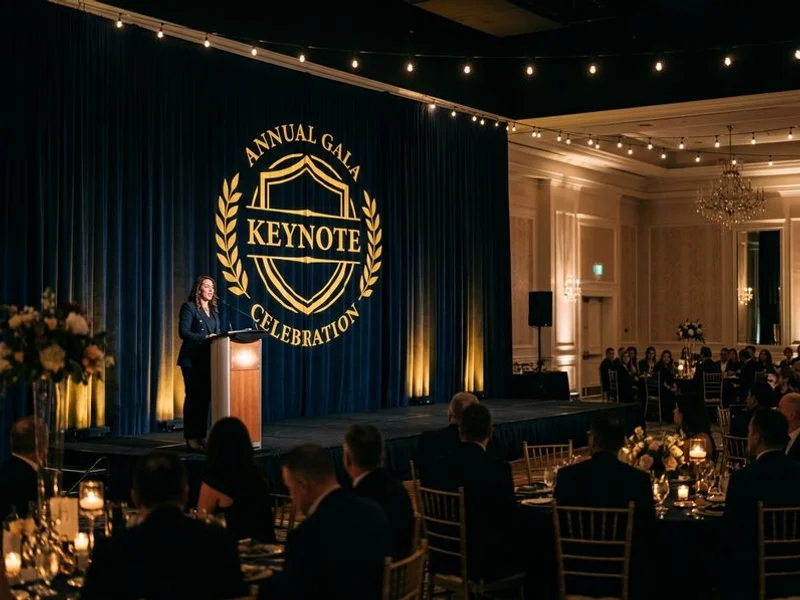
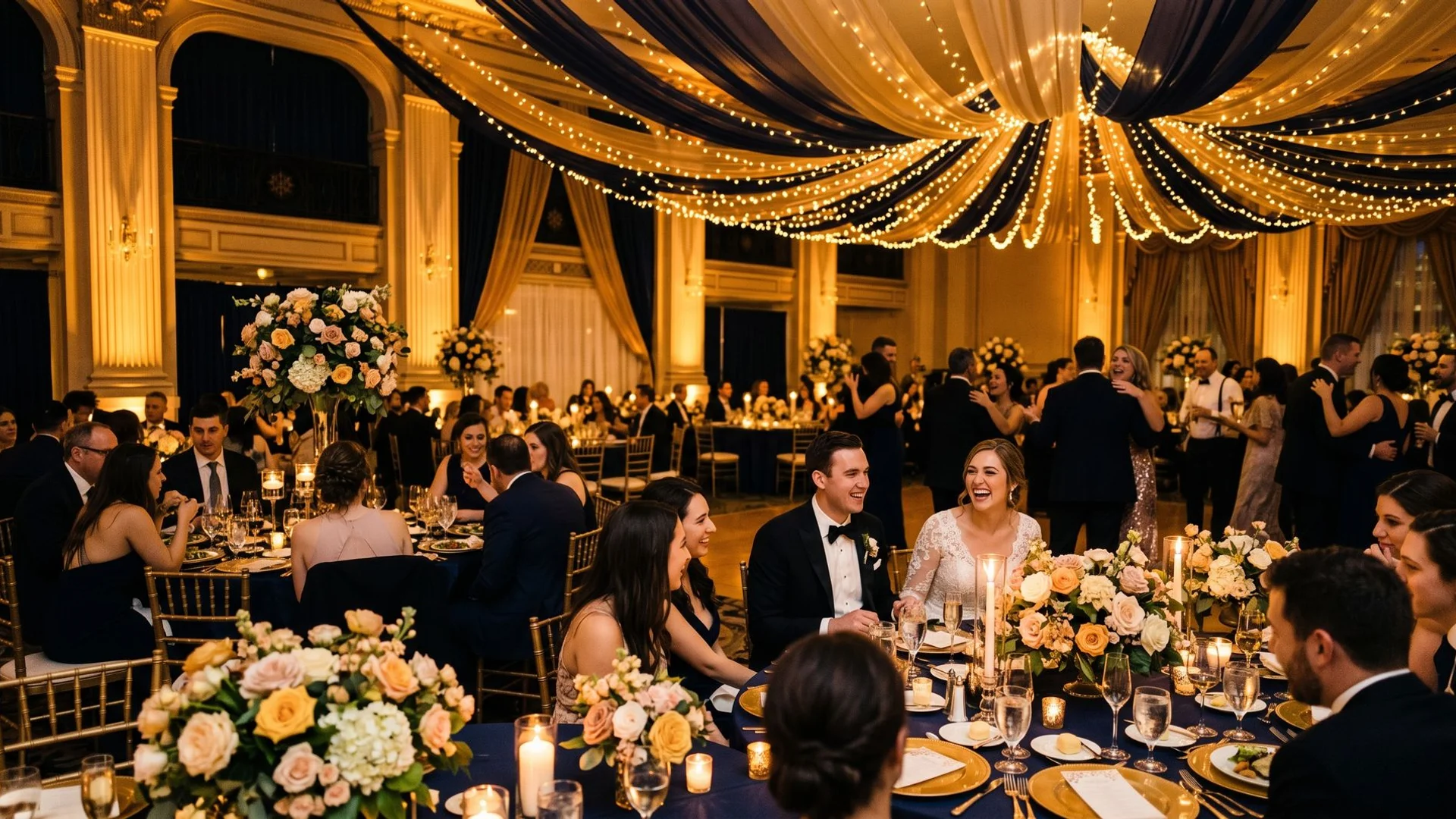
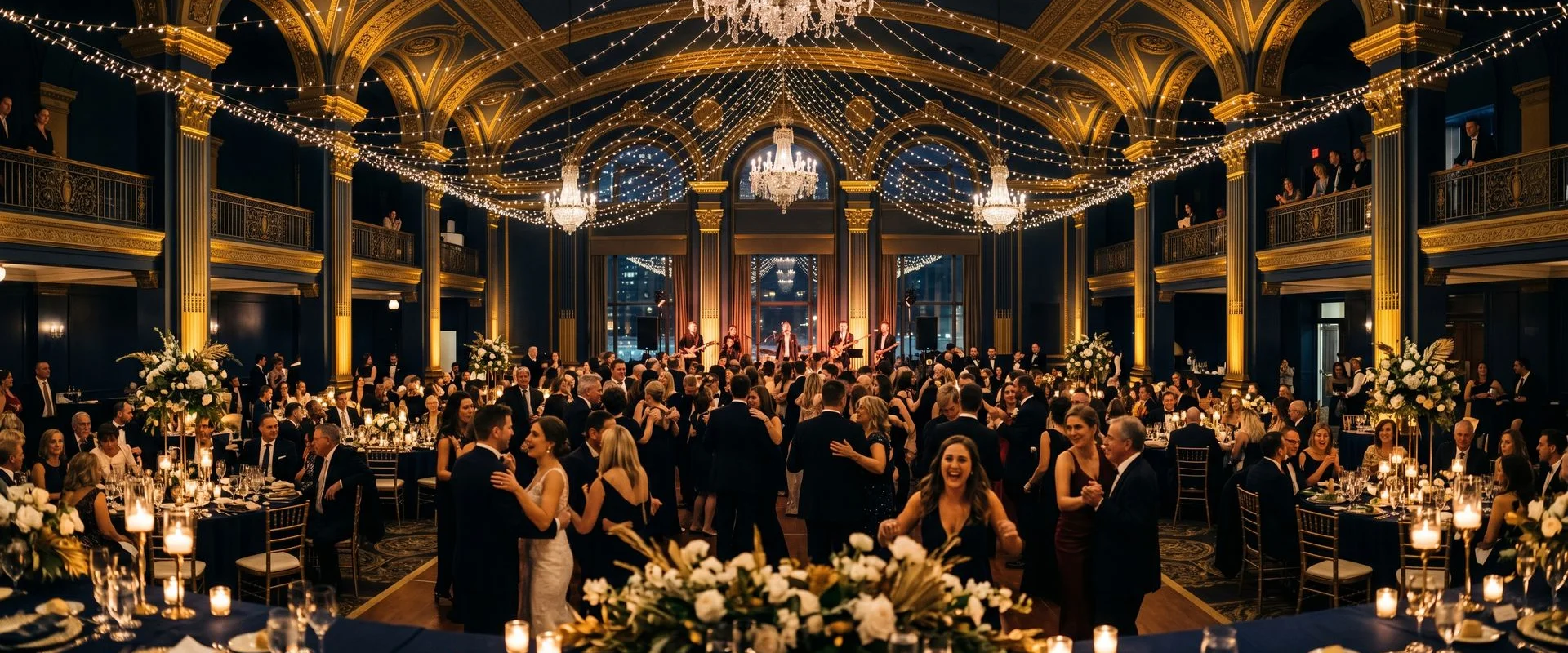
Corporate gala lighting has a different objective than a product launch or a brand activation. Rather than a single technical reveal moment, a gala requires sustained ambient quality across the full duration of the event - from reception through dinner through the program through dancing - with smooth transitions between phases.
The reception phase (cocktails, standing mingling) benefits from slightly higher ambient intensity - 70-80% output on the wash fixtures - in a warm neutral tone (3000-3200K) that is flattering for photographs and comfortable for conversation. Too dim at cocktails and guests struggle to see faces across a crowded room; too bright and the space loses its event feeling.
Dinner service drops ambient intensity to 40-50% and adds pin-spotting over centrepieces at 80-100% output to create visual hierarchy - guests’ eyes go to the centrepieces and the table, not the undifferentiated wash. This is the phase where colour temperature management matters most for catering: warm (2700K) light makes food look appealing; cool (4000K+) light makes food look clinical. For corporate galas serving 300+ guests at venues in Vaughan or the North York banquet hall corridor, matching the ambient wash to the food styling notes from the catering team is a real operational requirement.
Program and awards phases require spotlighting: an ellipsoidal or moving-head profile fixture on the podium or stage area, at sufficient intensity to override the room ambient, with a colour temperature that flatters on camera (typically 3200-3600K for live video or photography). Moving head fixtures should be locked off on the stage position during speeches; moving light during a speech is distracting and amateurish. After the program, the wash transitions to a higher-intensity, more dynamic setting for dancing - and this is where corporate event lighting specialists in Toronto add value, because the transition from gala formality to party energy needs to happen convincingly and on cue.
Custom Gobo and Logo Projection for Corporate Events
Gobo projection is one of the highest-ROI corporate event lighting tools available, and it’s one of the most misunderstood in terms of what’s actually required to execute it well.
A gobo is a precisely cut metal or glass template placed inside an ellipsoidal spotlight’s optical gate. The light passes through the cutout and projects the pattern onto a surface. For corporate events, custom gobos are laser-cut with company logos, product names, event titles, or geometric brand patterns. A steel gobo for a standard event costs $150-$250 to fabricate; a full-colour glass gobo is $400-$800. Both require a 3-5 business day fabrication lead time from artwork approval.
The projection surface and fixture placement define the quality of the output. On a smooth matte wall at 20 feet, a 10-degree beam gobo produces a crisp, edge-defined projection roughly 3.5 feet in diameter. On textured brick or rough stone, the image scatters. Glass floors and polished marble reflect rather than diffuse the projection. The ideal surface for logo gobo is a flat matte backdrop, a smooth hardwood dance floor, or a purpose-built projection screen - surfaces common to hotel ballrooms and convention centres in Markham, Scarborough, and downtown Toronto.
For multiple logo placements - a 500-guest summit where you want the company logo on every entrance wall, behind the stage, and on the dance floor simultaneously - you need multiple fixtures, each with its own gobo and its own DMX channel for independent dimming. Pre-visualization software (WYSIWYG and Vectorworks) allows clients to see the placement and coverage digitally before install day, avoiding expensive adjustments on the day of the event.
On-Site Lighting Technicians and Live Operation Explained
An on-site lighting technician is not a setup person who leaves after the equipment is installed. At professional event lighting companies, the technician is a trained operator who stays through the event running the show from a booth, managing DMX cues in real time, and troubleshooting anything that comes up during the event.
The role has three phases. Pre-show: arriving at load-in, building the rig, checking fixtures, programming cues, and running a show rehearsal with the venue AV team and the client representative. For corporate events, pre-show can take 4-8 hours depending on rig complexity. Show operation: managing the cue sequence from the first guests arriving through dinner service, the program, and the after-party. At a 500-guest annual summit, the cue sheet might have 40-60 time-coded events - each one executed at the right moment by the technician at the booth. Troubleshooting: if a fixture goes offline, a cue misses, or a power circuit trips mid-event, the technician resolves it in real time. This is where on-site presence pays for itself - a remote “we’ll fix it after” response costs the client the event moment.
The equipment in a well-run tech booth at a Toronto corporate event includes: a DMX controller (typically an MA Lighting grandMA or similar professional console for complex shows), a tech spare kit (extra gobos, replacement lamps, cable adapters, spare GFCI outlets), a communication headset linked to the venue AV and production teams, and a cue sheet with time codes for every key moment. For large-scale events at venues like Pearson Convention Centre or Chateau Le Jardin, we coordinate with the venue’s in-house AV team to ensure our lighting cues are synchronised with their video and audio systems.
DMX-Programmed vs. Static Lighting for Corporate Events
The DMX question is one of the most common conversations in corporate event lighting scoping, and the answer depends entirely on what the event actually needs.
Static lighting means the fixtures are set and the show doesn’t change during the event. Uplight colours are dialled in before doors open, intensity levels are set, and nothing changes for the duration of the event. Static setups are appropriate for dinners, receptions, and ambient-only environments where the goal is consistent, flattering ambiance without distraction. They cost less to operate because they require less operator time, and they’re less risky because there are no live cues to miss.
DMX-programmed lighting means the show changes during the event based on pre-programmed cues. This spans a wide range: from a simple two-state cue (dinner wash then after-party wash) to a 60-event time-coded sequence with moving heads, colour changes, and sync to audio. The right level of DMX programming depends on whether the event has moments that benefit from dynamic change - a product reveal that needs a dramatic lighting shift, an awards segment with individual spotlights, an after-party that transitions from ambient to dynamic energy.
The cost difference is real. A DMX-programmed show for a 200-guest corporate gala at a Vaughan banquet hall might add $800-$1,500 to the cost compared to a static setup for the same fixture count, accounting for programming time, pre-visualization, and extended operator hours. The return on that cost is only meaningful if the event actually benefits from the dynamic elements. A dinner without a program moment - an informal office holiday party, a client reception, a small team gathering - is better served by a well-dialled static setup than by a DMX show running cues that don’t land because there’s no production moment to support them.
Choosing a Corporate Event Lighting Company for Venue Compliance
Venue compliance is the most common source of post-booking stress in corporate event planning, and it’s almost entirely preventable with the right lighting contractor.
Most premium GTA corporate venues have a list of requirements: insurance minimums (typically $2M-$5M commercial general liability), rigging restrictions, load limits on structural anchor points, prohibited adhesives and attachment methods, and vendor qualification processes. Casa Loma requires pre-approval for any lighting vendor and prohibits ceiling rigging. Liberty Grand has a house lighting system that external contractors must coordinate with, not replace. The Fermenting Cellar and Steam Whistle Brewing in the Distillery District have heritage protections that prohibit certain attachment methods on exposed brick. A lighting contractor unfamiliar with these requirements will either be turned away on load-in day or will deliver a setup that compromises the venue’s requirements.
Asking the right questions before hiring removes this risk. The key questions: Does the contractor carry a minimum $2M general liability policy with the venue named as additional insured? Do they carry WSIB coverage for their crew? Are they familiar with the specific venue you’re booking, and have they worked there before? Can they provide rigging-free alternatives if the venue prohibits ceiling work? What is their emergency contact process if a fixture goes offline during the event?
The GTA corporate event corridor - Vaughan and Woodbridge for the banquet hall cluster, Markham for the Convention Centre and York Region properties, downtown Toronto for heritage venues - has a small pool of lighting contractors with genuine venue relationships and the crew depth to handle 200+ guest events without rescheduling risk. Trusted by Amazon and Mazda, we’re on the approved vendor list at most major GTA corporate venues and can share venue-specific compliance documentation on request.
Related Questions Corporate Planners Ask About Event Lighting in Toronto
How far in advance should we book corporate event lighting?
For standard corporate setups (ambient wash, static gobo, basic uplighting), 4-6 weeks is the minimum lead time for proper site visit, design, and material preparation. For DMX-programmed shows, brand activations, or custom tunnel or pixel-mapped installations, book 8-12 weeks ahead to allow programming, pre-visualization review, and any custom fabrication. High-demand dates - annual gala season (November-December) and conference season (April-May, September-October) - fill faster; for those periods, 12 weeks ahead is a safer planning target.
What equipment do you use for corporate events?
We run Chauvet Professional and Elation Professional fixtures for wash and spot applications - industry-standard equipment used by touring production companies and venue AV departments. DMX control via MA Lighting grandMA for complex shows, with simpler consoles for straightforward setups. Rigging via truss (Prolyte or equivalent box truss for aerial work) or freestanding totem structures for restricted venues. All power distribution through 30-amp or 63-amp three-phase distros with GFCI protection at every branch circuit.
Can you coordinate with the venue’s in-house AV team?
Yes. We arrive early enough on load-in day to have a technical coordination meeting with the venue AV crew and confirm DMX addressing, power draw, and cue synchronisation. For large events with complex AV integration (video walls, live streaming, simulcast to breakout rooms), we can share our DMX cue sheet with the AV director in advance to identify any conflicts before load-in.
Do you have experience with high-profile brand events?
Yes. We have worked with brands including Amazon and Mazda on product launches and annual summits. Both events required exact Pantone colour matching under live camera conditions, zero-miss cue execution across a 4-6 hour program, and venue compliance at restricted-rigging GTA venues. References are available on request.
What’s included in your corporate event lighting service?
A full-service corporate package includes: site visit and venue walkthrough, custom design and DMX programming, pre-visualization review with the client, load-in and full rig installation, event operation with a dedicated technician at the booth, load-out after the event, and a post-event production report if required. Equipment is provided; the client provides the venue, the power access, and the event brief.