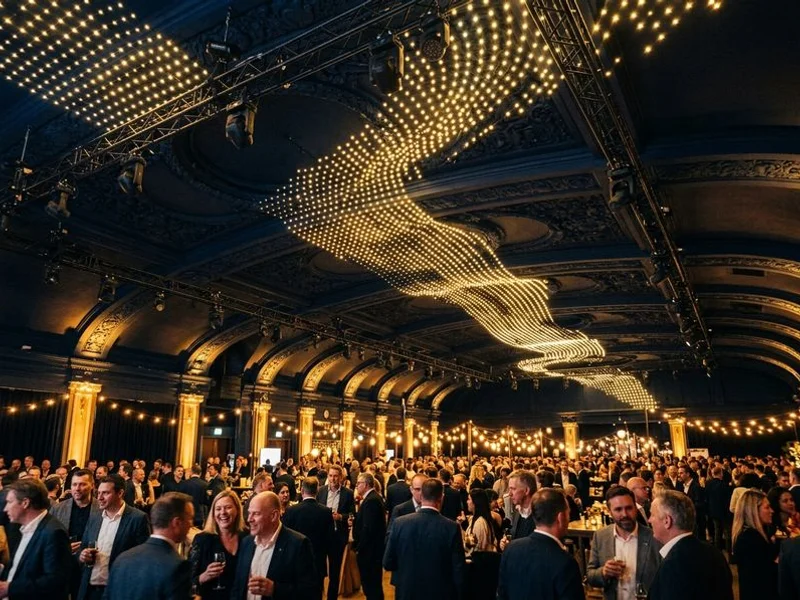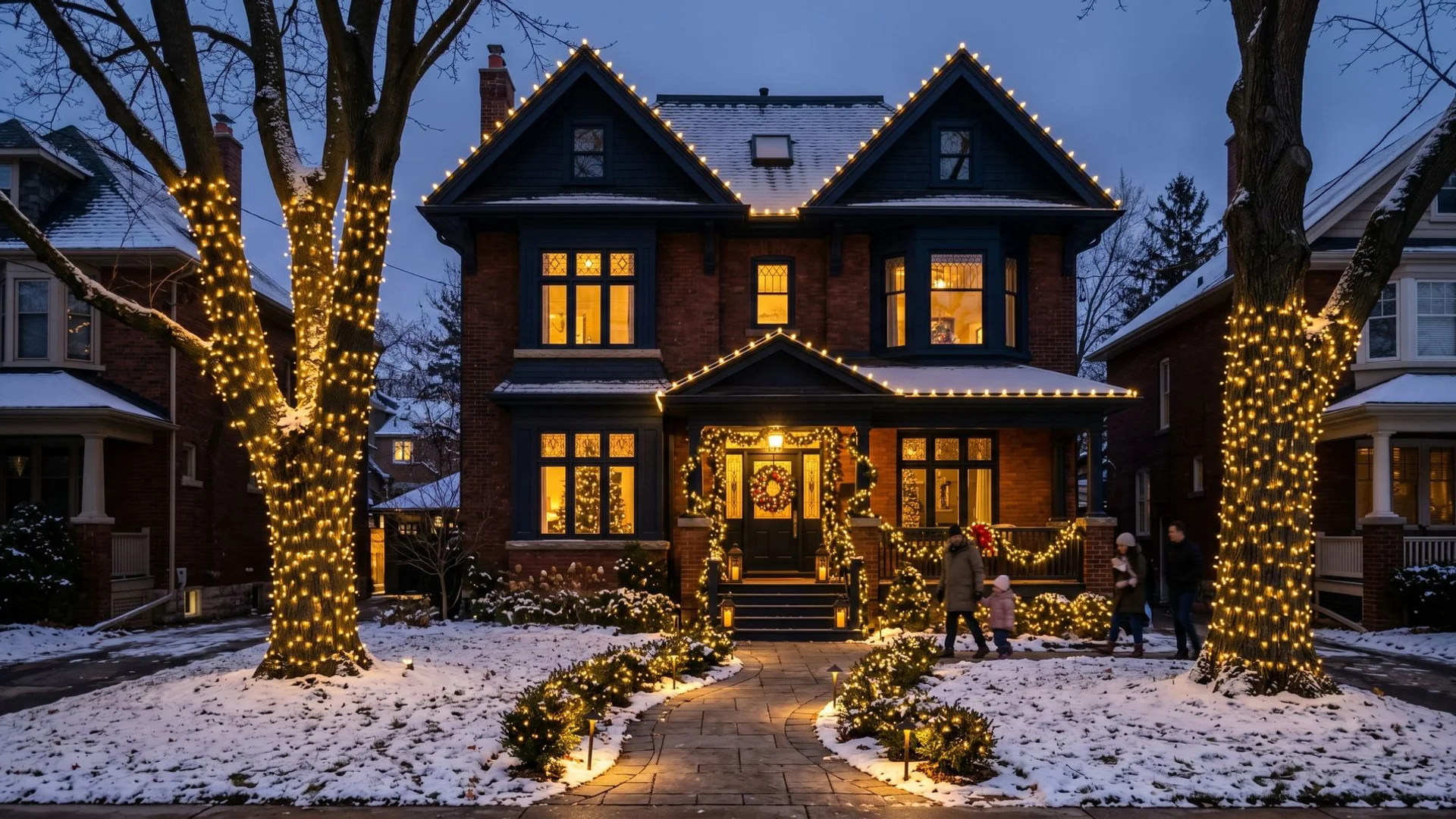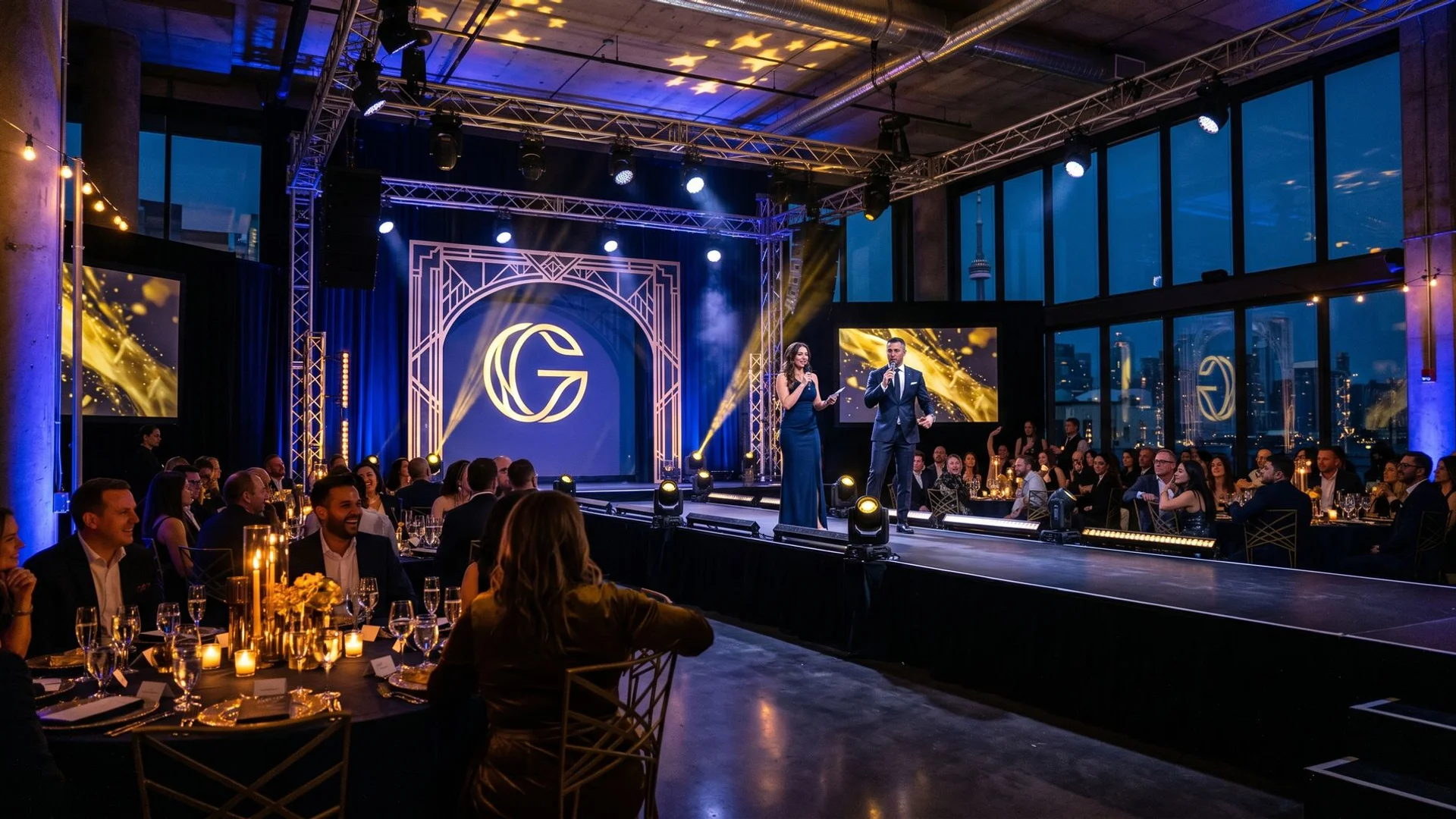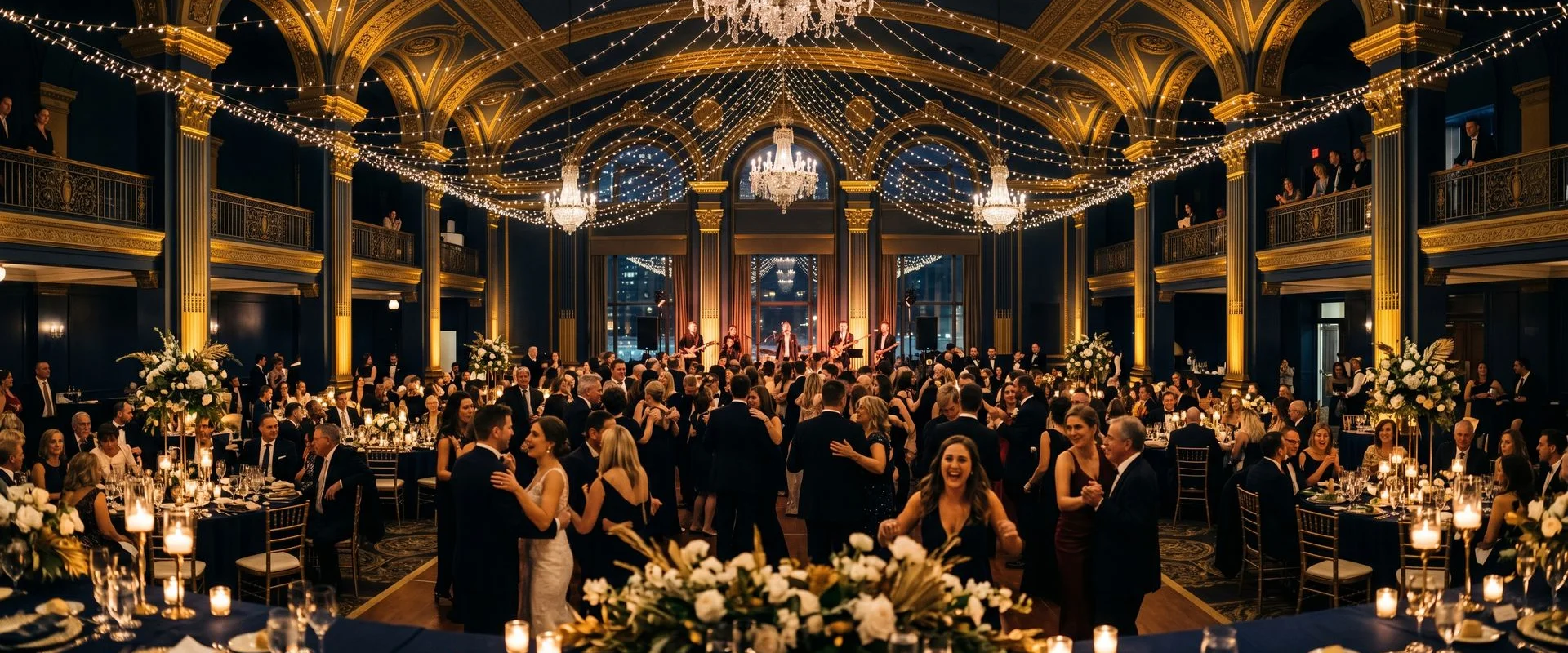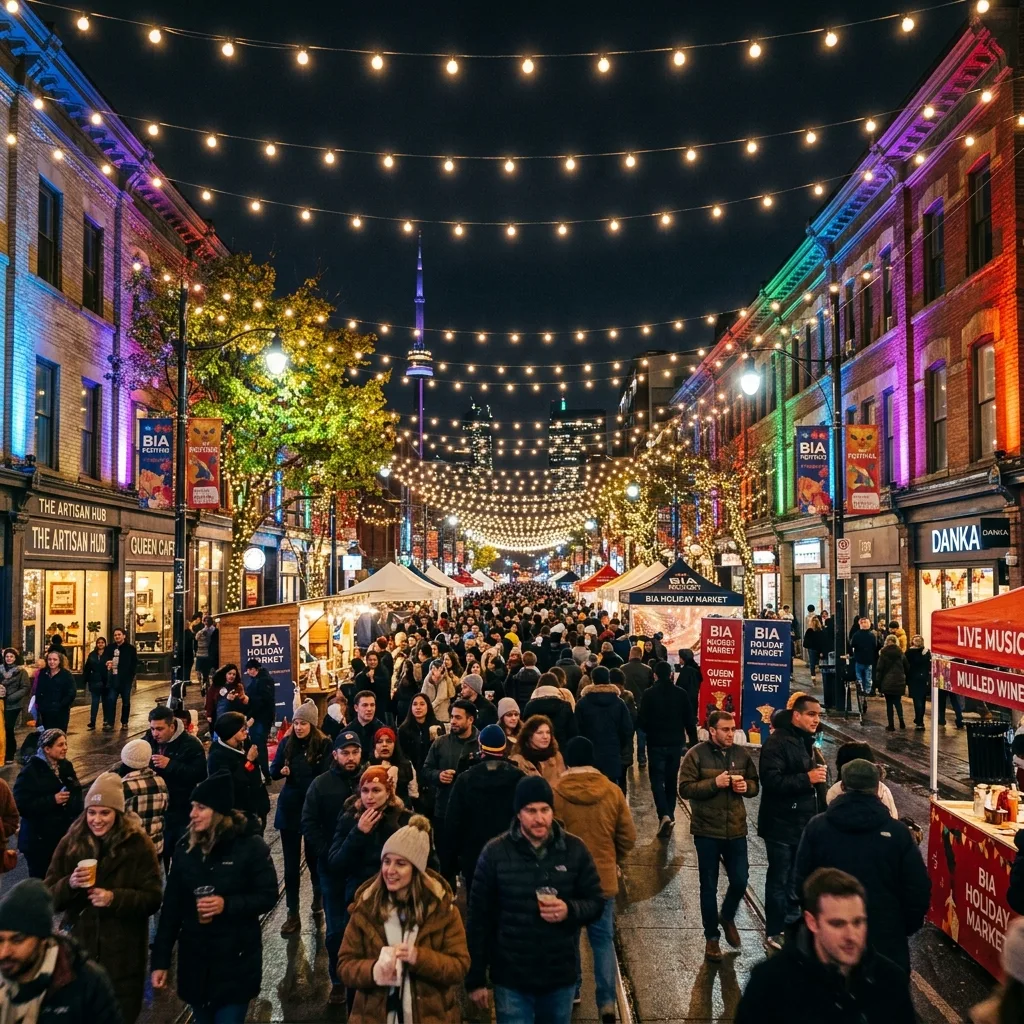
Lighting That Makes the Block the Event
A street festival without lighting after dark is a daytime event that accidentally stayed open. A BIA holiday district with bare poles is a missed opportunity. A multicultural celebration with flat, undirected light is one that didn’t honour the occasion.
Event Lighting Rentals Toronto designs and operates outdoor festival and city event lighting for BIA associations, municipal event offices, festival producers, and civic organizations across Toronto and the GTA - from a single-block Diwali Mela or Christmas village to a multi-block summer festival with stage lighting, feature installations, and a 3-person crew running operations across 4 days.
Every outdoor city event has a compliance dimension that indoor events don’t. Ontario Special Events permits, road occupation applications, Ontario Fire Code generator placement requirements, and temporary structure compliance under the Ontario Building Code - all of this has to be navigated before a fixture goes up. We’ve run the permit process with the City of Toronto, the City of Mississauga, and the Region of Peel for multiple event types. The event organizer doesn’t need to learn the permit pathway - that’s already in our production workflow.
Festival Lighting Scale: What Each Tier Looks Like
| Scale | Footprint | Fixtures | Power | Crew | Typical Cost |
|---|---|---|---|---|---|
| Single-block BIA activation | 1 city block | 50-100 festoon/uplight | Utility connection | 2 crew, 1 day | $5,000-$12,000 |
| Multi-block district holiday | 2-5 blocks | 150-300 fixtures | 100A distribution | 3-4 crew, 2 days | $12,000-$35,000 |
| Community festival (1 day) | Park or plaza | 100-200 fixtures + stage | 100A generator | 3 crew, install + ops | $10,000-$25,000 |
| Multi-day street festival | 3-8 blocks | 300-600 fixtures + stage | 200A-400A generator | 4-6 crew, 4-6 days | $25,000-$80,000 |
| Large civic production | 8+ blocks or park | 600+ fixtures | 400kW generator | 6-10 crew, 5-10 days | $80,000-$150,000+ |
Costs above include design, permit documentation support, installation, operations through the event, and full strike. Generator rental is typically coordinated through our supplier network and invoiced separately or included depending on the contract structure.
Power Distribution for Outdoor Festival Lighting
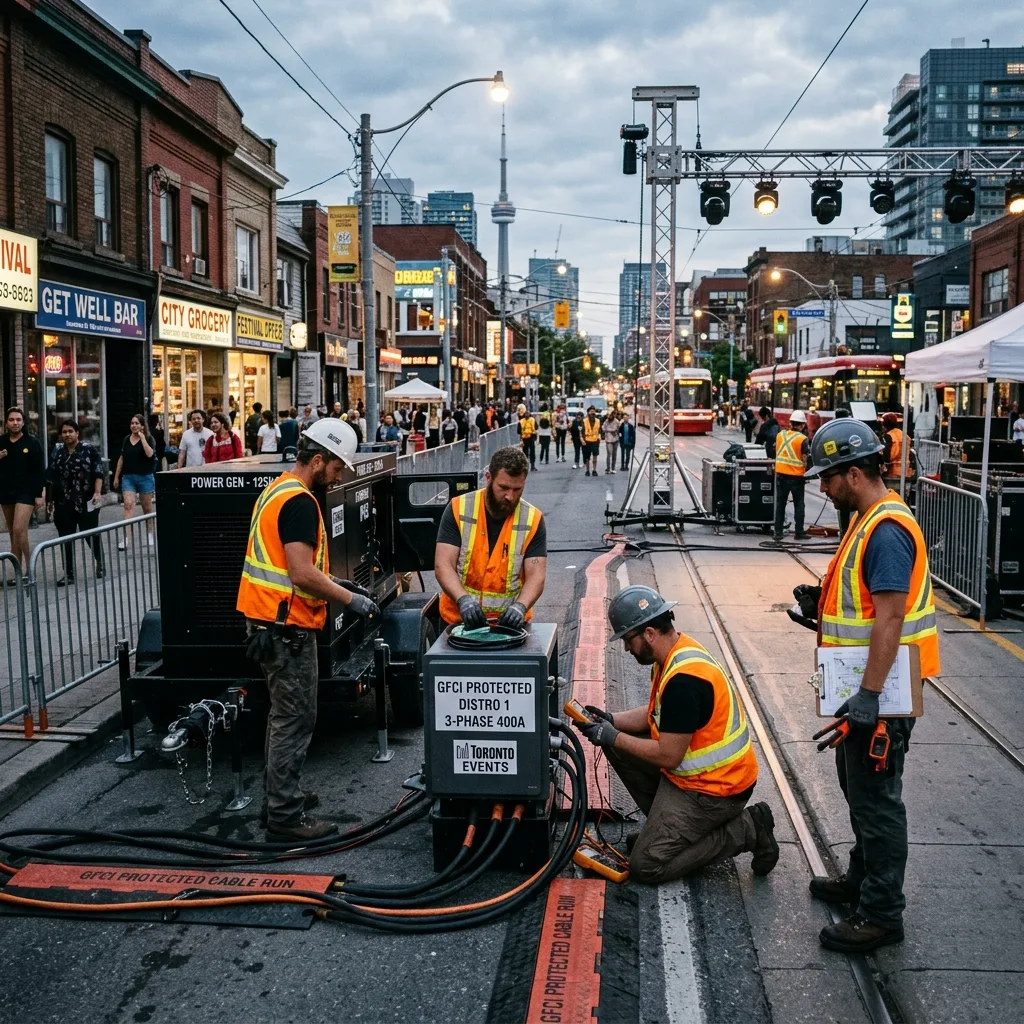
Outdoor festival lighting can’t run off a few 15-amp utility drops. A 3-block festival with festoon overhead, stage uplighting, and feature architectural lighting is pulling 60-100 amps of continuous load - more during DMX show sequences. Getting power distribution right is the difference between a festival that runs clean and one where a tripped GFCI at 9PM takes out a block mid-event.
Our standard outdoor distribution stack for festival work:
| Component | Spec | Purpose |
|---|---|---|
| Generator | 100kW-400kW diesel, Tier 4 | Clean power for full footprint |
| Main distribution | 200A or 400A, weatherproof | Single feed from generator to site |
| Sub-distribution boxes | 60A-100A, IP65 rated | Branch distribution per zone |
| Branch circuits | 20A GFCI each | Individual fixture runs |
| Cable | SOOW 12/3 or 10/3, outdoor rated | All runs |
| Cable protection | Rubber cable ramps where pedestrian cross | Trip hazard elimination |
Generator sizing is calculated from the total fixture load plus a 20-30% safety margin. For festival footprints where utility power is available at the perimeter, we use utility as primary and generator as standby - this reduces generator runtime and fuel cost for multi-day events.
Ontario Special Events Permit: What It Covers and What You Need
The Ontario Special Occasion Permit (SOP) from the AGCO covers alcohol service at temporary events. A separate City of Toronto Special Events permit covers the use of public space, road closures, and sound levels. For festival lighting specifically, the permits that apply are:
- Road Occupation permit - required when staging vehicles (generator, equipment trucks) or structures on public roadways
- City of Toronto/Municipal Special Event permit - required for events in public parks, streets, or city property above a certain attendance threshold
- Temporary Structure permit (Ontario Building Code) - required for any overhead structure bearing load (truss, arch, or overhead tension wire system above 3 metres)
- Ontario Fire Code compliance - generator placement (3m clearance from structures), cable management, and egress path maintenance
We prepare the lighting-specific documentation required for permit applications - site plans showing fixture placement, generator location, power distribution routing, and structure details - in the format required by City of Toronto or regional municipality permit offices. The event organizer files the permits; we provide the documentation package.
BIA District Holiday Lighting Contracts
Business Improvement Areas across Toronto, Mississauga, Brampton, and York Region run annual holiday lighting programs that range from basic pole-mount decorations to full-district immersive experiences with festoon overhead, tree wrapping, feature installations, and programmed light sequences.
The operational requirements for a BIA contract differ from a single event:
- Installation must happen in a compressed window (typically 2-4 weeks in October-November) without disrupting merchant operations or daytime foot traffic
- Lighting runs for 8-12 weeks continuously - fixtures must be commercial-grade, not event-rental quality
- In-season maintenance is not optional: a dark block during December peak costs merchants real revenue
- Takedown and storage needs to be scheduled and completed before spring
Multi-year BIA contracts include annual design updates to refresh the look without a full re-install, a dedicated account manager for all in-season service calls, and end-of-season condition reporting so the BIA knows what’s being retired vs. stored for next year.
BIAs in the Little Italy, Danforth East, Etobicoke Centre, Yonge-Eglinton, and Kennedy Road corridors, as well as South Asian commercial districts in Brampton’s Steeles/Bramalea area and Mississauga’s Hurontario corridor, have specific cultural occasion lighting needs (Diwali, Eid, Lunar New Year) that run on a separate calendar from the December holiday season. We design year-round district lighting programs that cover all major cultural celebrations on a single managed contract.
Related Questions About Festival and City Event Lighting
How far in advance should we book for a major city festival?
Large civic productions (multi-block, 5+ days, 300+ fixtures) require 8-12 weeks of lead time from first meeting to mobilization. This timeline covers design, permit application and approval (City of Toronto special event permits typically take 4-8 weeks), fixture procurement, generator coordination, and crew scheduling. Single-block BIA activations can typically be executed with 3-4 weeks of lead time.
Can you handle a Nuit Blanche or major Toronto arts festival installation?
Yes. Large public arts and cultural festival installations with multi-venue footprints, artist-specific lighting requirements, and overnight operational crews are within our scope. These projects require a production manager, a site coordinator at each major installation, and a logistics plan for overnight fuel delivery for generator-powered sites. Reach out with the event brief and we’ll assess the scope and timeline.
What happens if weather forces a cancellation mid-festival?
Our festival contracts include a documented weather contingency protocol - lighting is secured or powered down based on wind speed and precipitation thresholds defined in advance. Generator-powered sites can be shut down and restarted quickly; utility-connected sites can be isolated at the distribution box. For multi-day festivals, the operations crew monitors weather and executes the contingency plan without requiring authorization from the event organizer for standard weather protocols.
Do you subcontract or is this all in-house?
All installation, operations, and strike work is performed by our in-house crew. We don’t subcontract installation labour. Generator rentals and some specialty fixture procurement are sourced from our established supplier network, but crew work is always in-house and covered under our own WSIB and liability policy.