Skip the Ladder. Light Up the Season.
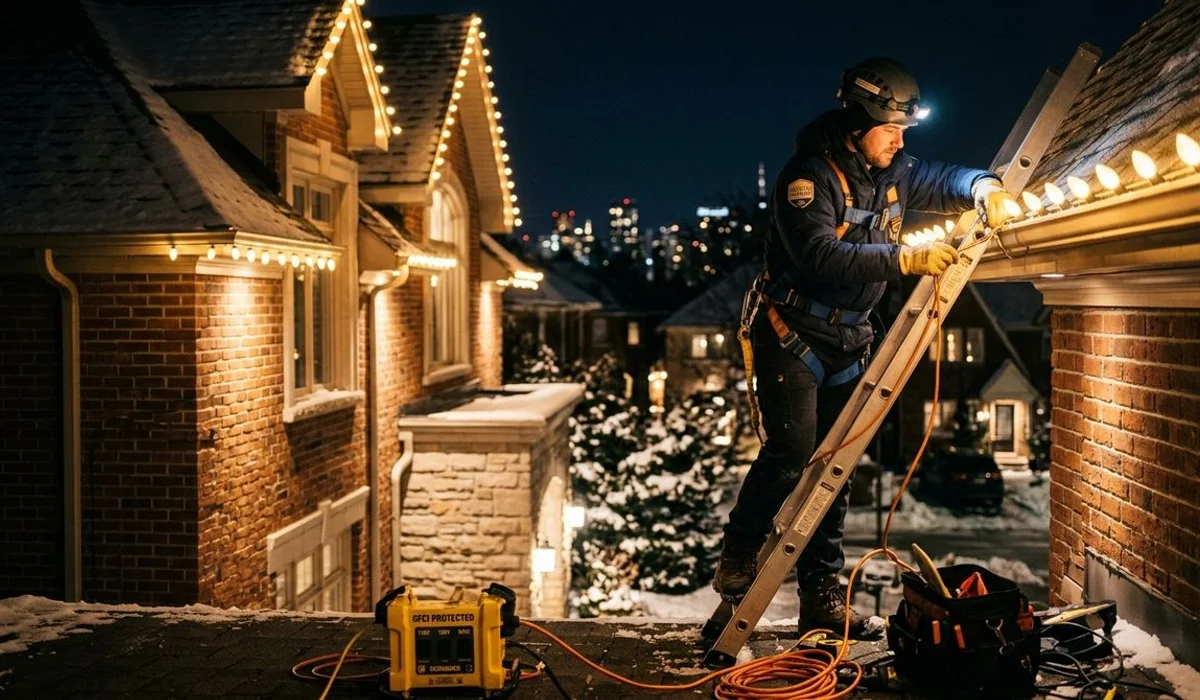
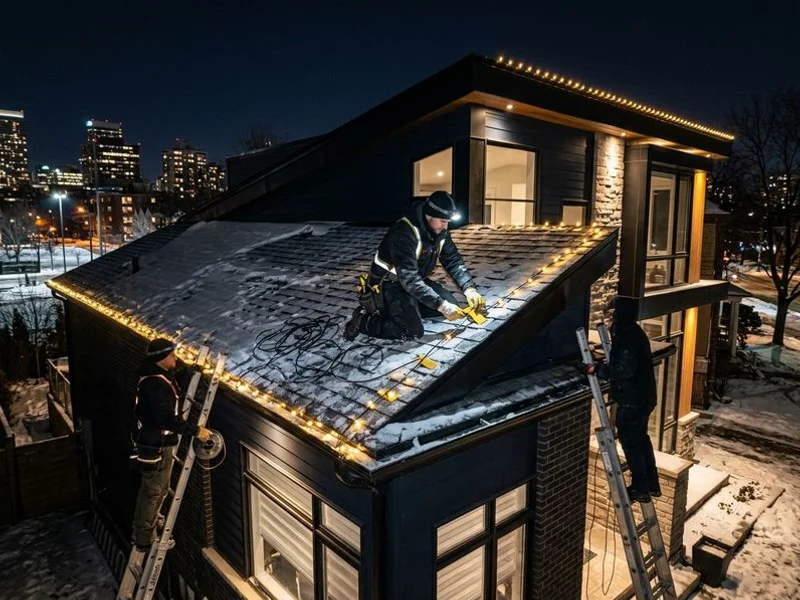
December in the GTA is no place for amateur ladder work. Frozen gutters, icy roofs, daylight gone by 4:30. Installing holiday lighting yourself is a hazard, and the result rarely looks like the magazine cover you had in mind.
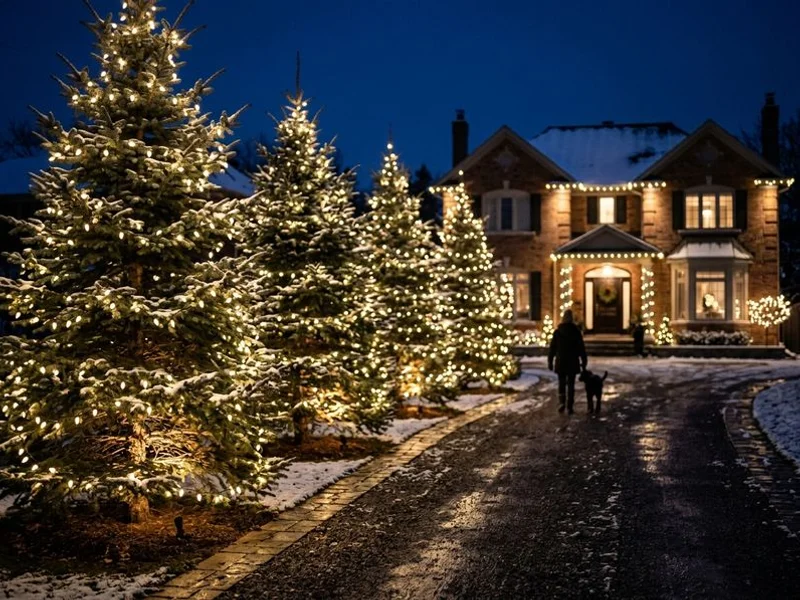
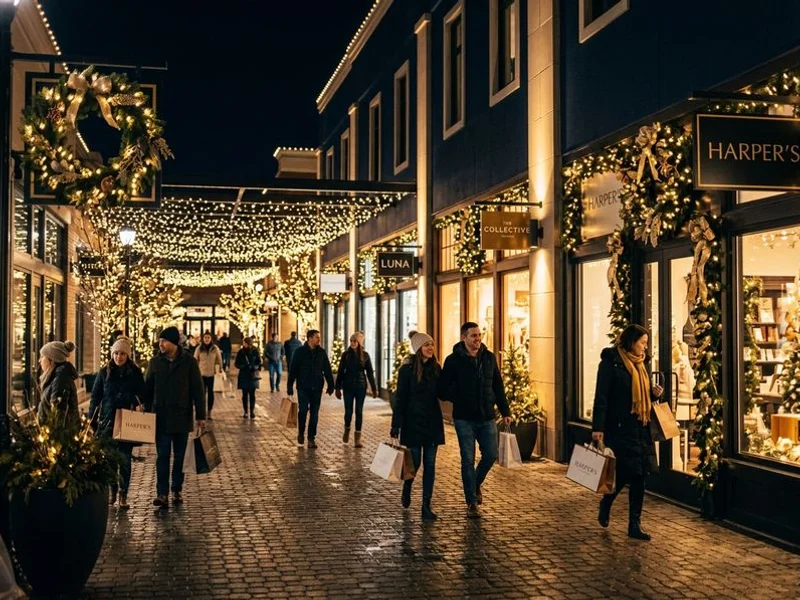
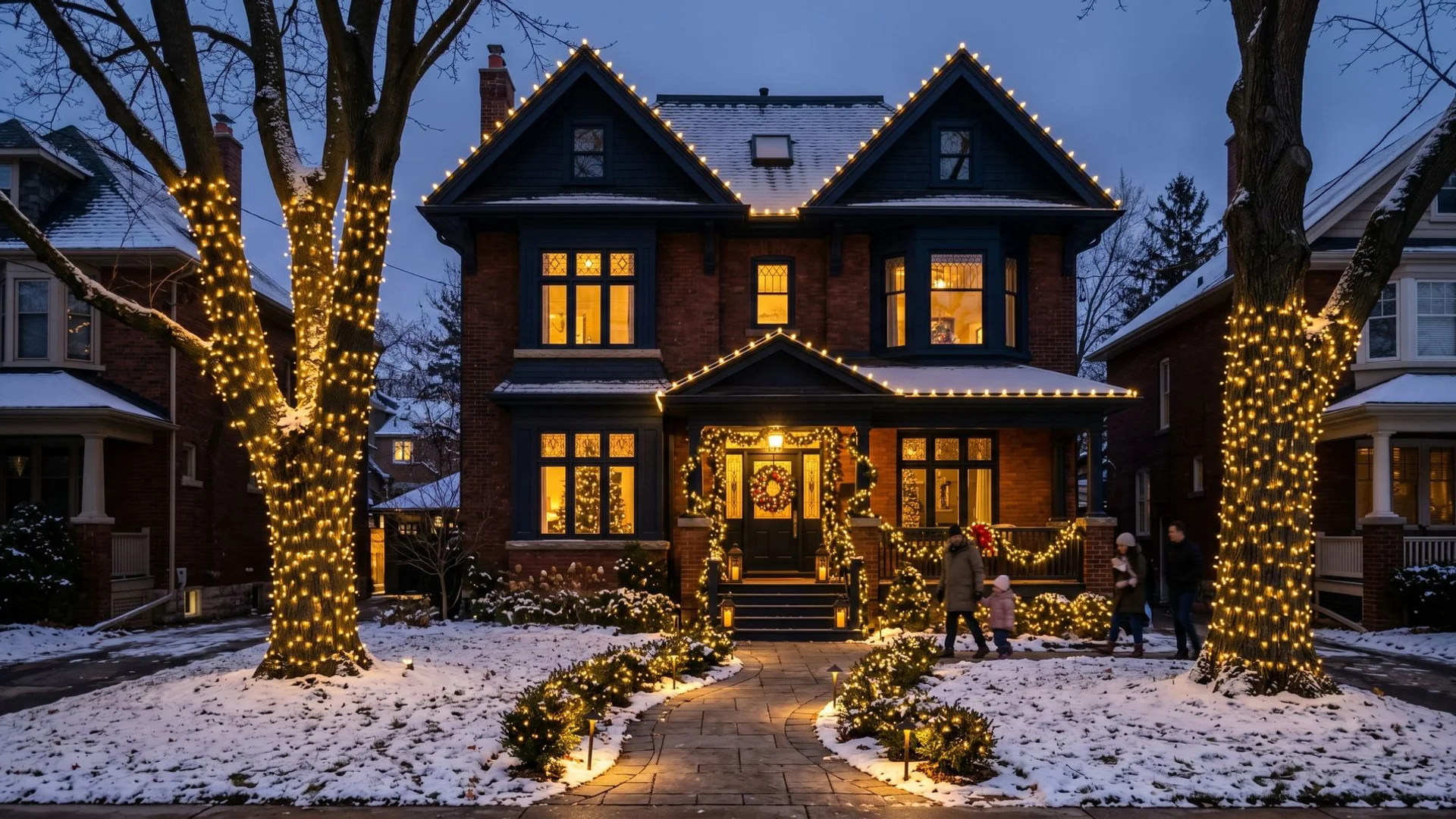
We’re the event and holiday lighting team across the Greater Toronto Area that property owners, businesses, and municipalities call when they want it done right. From a single Toronto home with a warm-white C9 roofline to a Mississauga shopping plaza with wreaths and canopy lighting to a Diwali display across a Brampton wedding house, we design, install, maintain, and take down.
Holiday Lighting Services We Provide
- Residential Christmas displays: rooflines, evergreens, pathways, columns, eaves
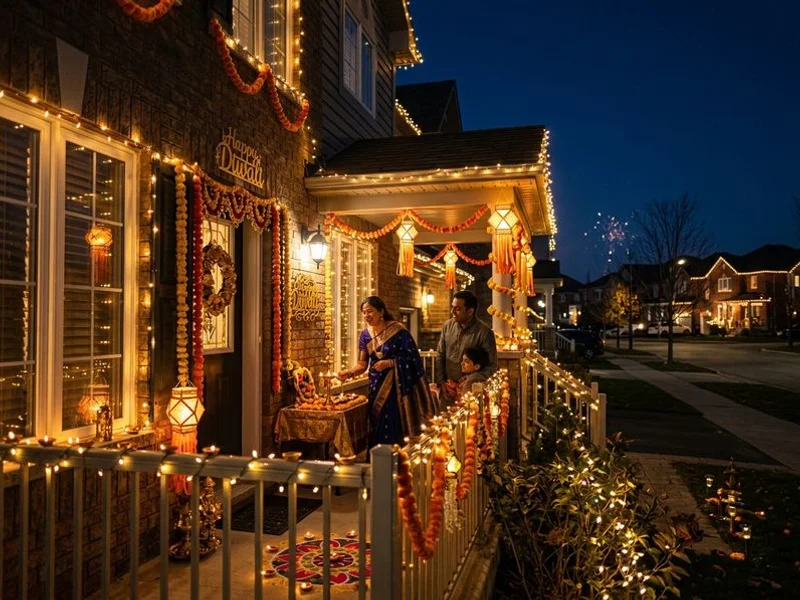
- Diwali festive lighting: South Asian home facades, lanterns, fairy-light drapery
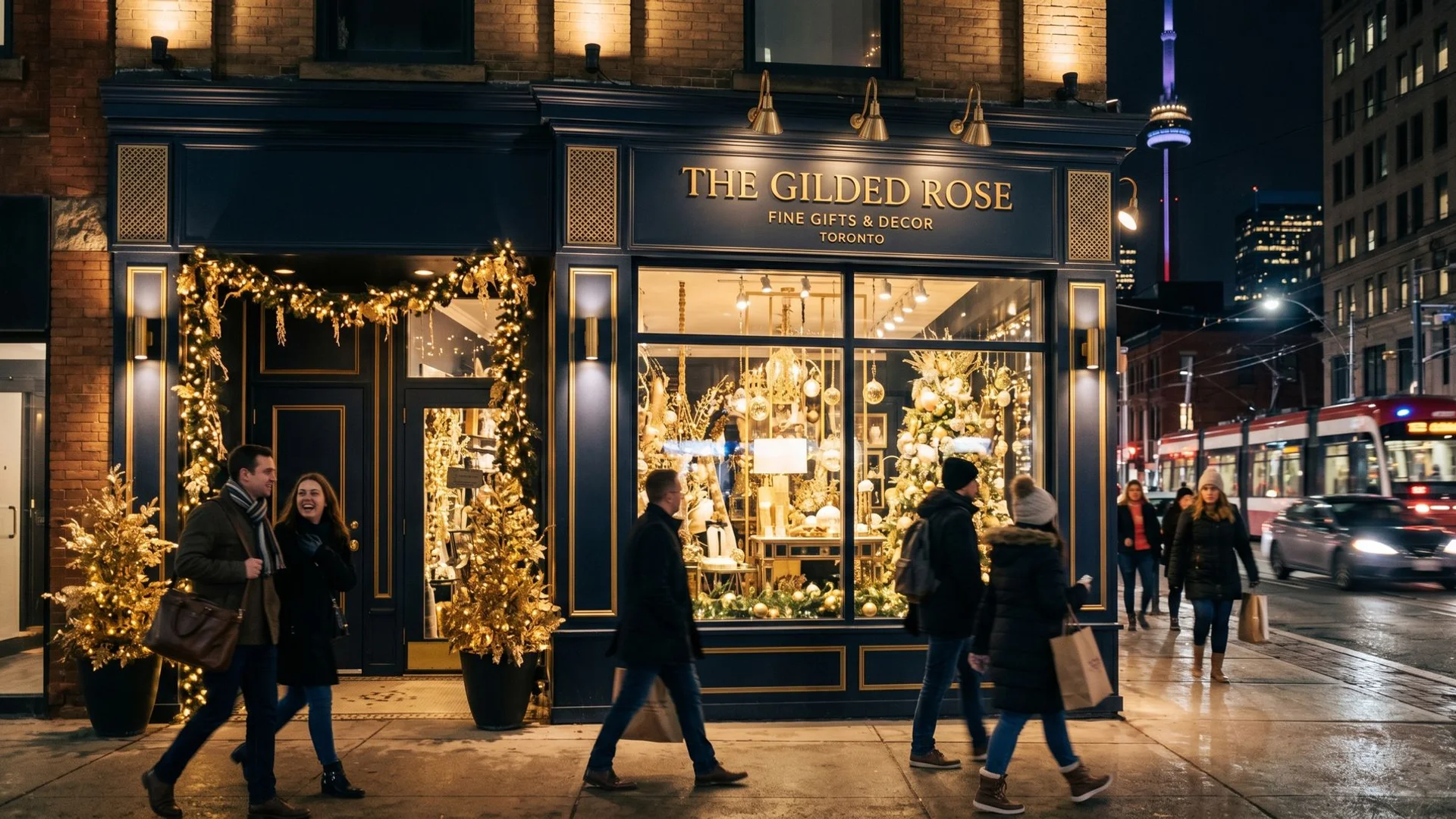
- Commercial holiday packages: shopping plazas, office buildings, retail storefronts
- Municipal and city displays: public squares, main streets, civic buildings
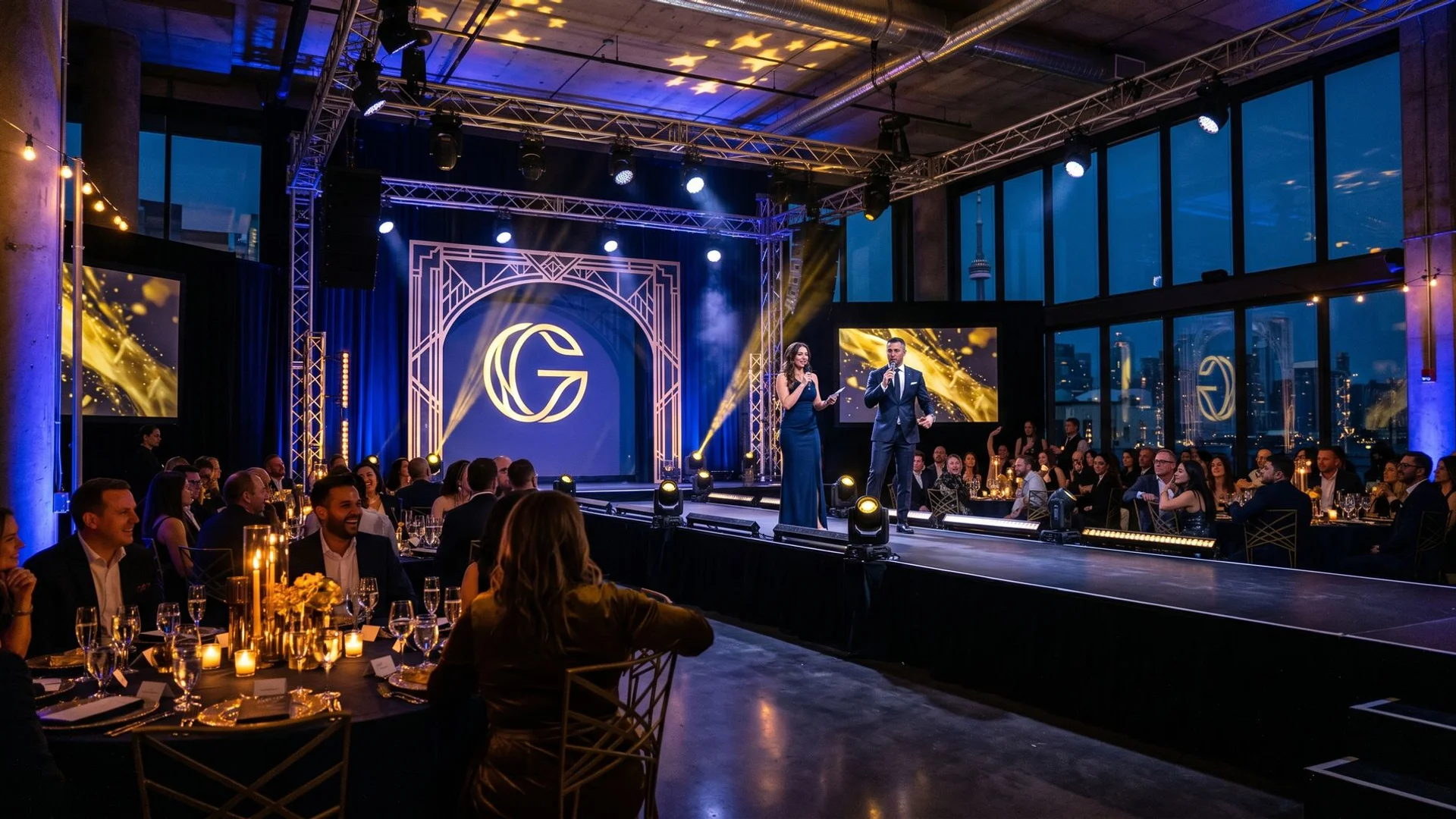
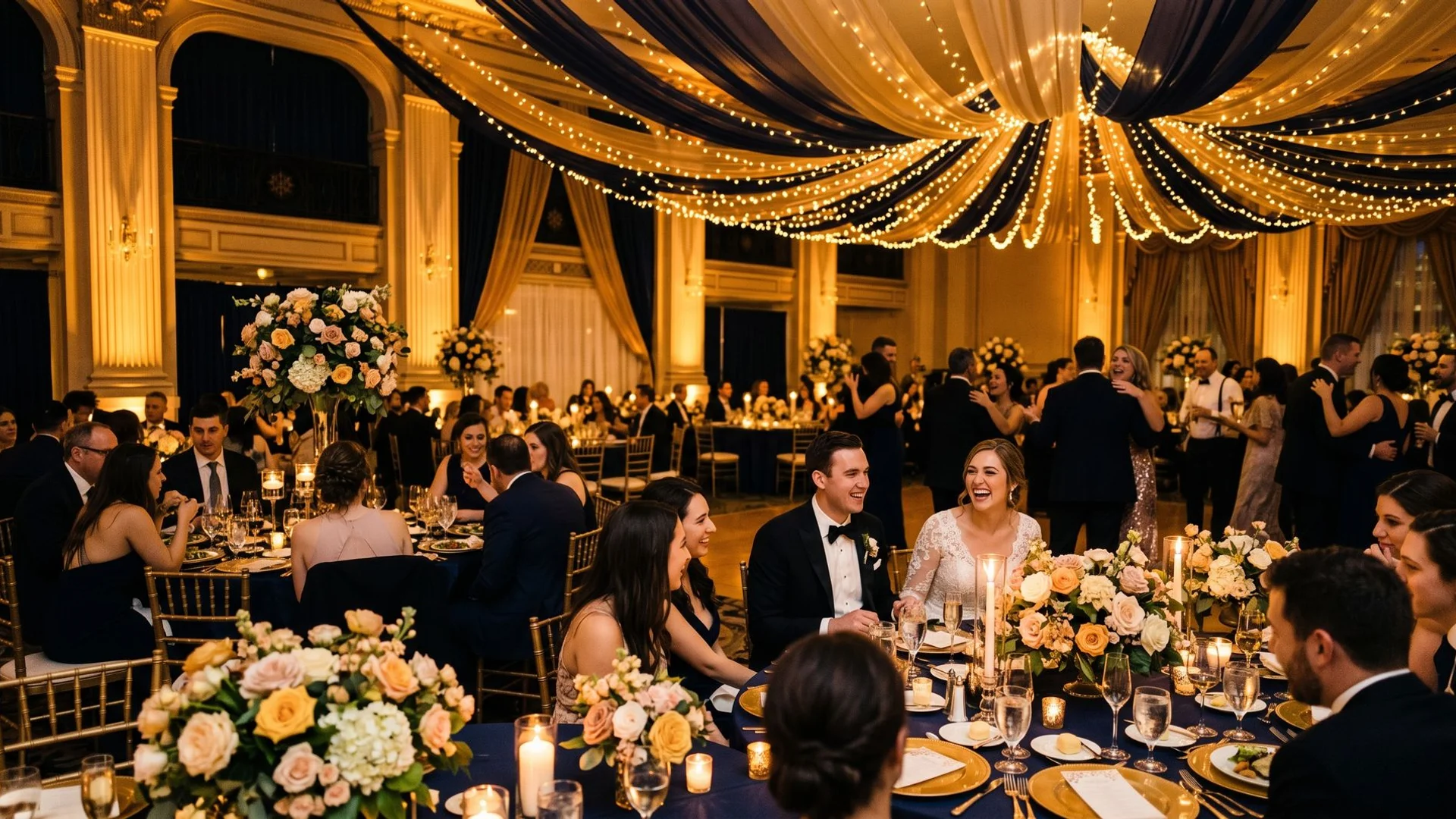
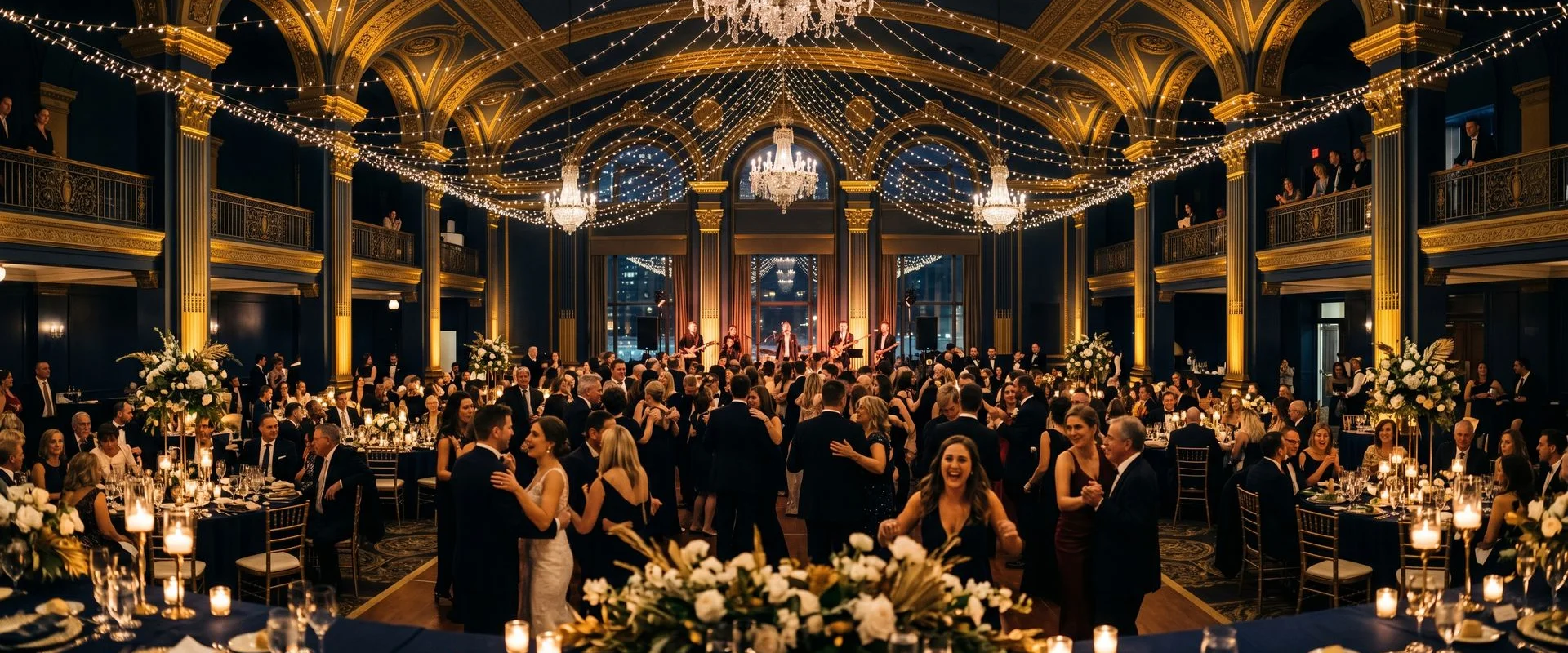
- New Year and seasonal one-offs: outdoor parties, corporate galas, private events
Commercial-Grade Materials
The C9 and C7 LED bulbs we use are a different category from anything in a big-box store. They’re brighter, more efficient, and rated for years of seasonal Ontario weather. The SPT-2 outdoor-rated wire is custom-cut to your roofline. No extension cords zigzagged across a porch, no spliced patch jobs.
Every install is GFCI-protected at the outlet and uses photocell timers so the lights come on at dusk and shut off automatically. We follow Ontario Electrical Safety Code (ESA) standards on every job.
What Your Holiday Lighting Package Includes
Booking with us covers:
- Free property assessment: rooflines measured, power access mapped, design proposed
- Custom-cut display: built to your specific home or building
- Professional install: shingle tabs and gutter clips (no roof damage), code-compliant power
- In-season maintenance: bulb replacements, weather damage repairs, on-call service
- Post-season takedown: typically the second or third week of January
- Storage between cycles: labeled, tested, ready for next year
Booking Calendar
- By mid-September: Christmas residential bookings for December install
- 6 weeks before Diwali: South Asian and festive display bookings
- By August: commercial property managers and multi-unit portfolios
- Year-round: special-occasion festive lighting for private events
Professional vs. DIY Holiday Light Installation: What the Difference Costs You
The DIY holiday light appeal is real: a box of C9 lights from Canadian Tire, a Saturday afternoon, and a roofline that glows by sunset. The reality is different. Residential holiday light installation involves ladder work on frozen or wet rooflines, electrical circuit management, and a fixture-count-to-circuit-load calculation that most homeowners don’t consider. Falls from ladders account for a significant portion of December injury reports in Ontario every year, and the vast majority involve residential holiday decorating.
Beyond safety, the result gap between DIY and professional installations in the GTA is visible from the street. Consumer-grade C9 bulbs from hardware stores use E17 sockets with thinner brass contacts and bulbs that vary in colour temperature from socket to socket - you’ll see it as an uneven glow, some warmer, some cooler, across the string. Commercial-grade C9 and C7 LEDs use E26 sockets with consistent lumen output and a rated colour temperature of 2700K across every bulb in the string. The custom-cut SPT-2 wire means the string terminates at the exact pitch of your roofline; there’s no doubled-back extra wire hanging off the corner.
Professional installation also means ESA-compliant power. Every outdoor holiday light string should terminate at a GFCI-protected outlet. A single 15-amp circuit is adequate for roughly 700 watts of C9 LED load - approximately 100-120 bulbs. A full residential roofline with eaves, gables, and evergreen wrapping commonly draws 800-1,500 watts across multiple circuits. Mapping that load correctly before installation day is the difference between a display that stays on all season and one that trips a breaker on Christmas Eve.
Commercial Holiday Lighting for Shopping Plazas, Parks, and Property Managers
Commercial holiday lighting for multi-unit properties is a different scope than residential. The scale, the scheduling complexity, and the compliance requirements are in a different category, and the right contractor for a single detached home in North York is often not the right contractor for a 40-unit shopping plaza in Mississauga.
Shopping plazas present specific challenges: coordinating access across multiple tenant storefronts, managing power distribution across a parking lot that may have limited outdoor outlets, and maintaining a consistent design language across facades of different architecture and colour. Property managers who manage holiday lighting as a portfolio - coordinating 6-10 properties across the GTA in a single season - benefit most from a single contractor who can handle design consistency, scheduling without conflicts, and a single maintenance call number for the entire portfolio.
Parks and municipal civic displays operate under a third set of requirements. Municipal work requires Working at Heights certification for any aerial platform work, $5M minimum liability insurance, WSIB compliance, and often a pre-qualification submission to the municipality’s procurement team. Large public installations - main street canopy lighting in Markham or Richmond Hill, civic tree wrapping for a Vaughan town square - are typically awarded through an RFQ or RFP process in Q3 (July-September). Property managers and BIA directors should be building relationships with their lighting contractors in August, not November.
The in-season maintenance component is where commercial clients see the clearest separation between professional and amateur operators. A residential client can tolerate a bulb outage for a week. A high-traffic shopping centre in Scarborough cannot - a section of dark roofline during the peak December shopping weekend has a real impact on foot traffic and tenant relations. Commercial packages should include a named response time (typically 24-48 hours) for outage calls, with a dedicated service technician during the December peak.
Diwali and Multicultural Festive Lighting Installation in the GTA
Diwali lighting installation in the GTA is a separate skill set from Christmas lighting, though the equipment overlaps substantially. The key difference is cultural context, timing, and execution scale in the residential South Asian community concentrated in Brampton, Mississauga, and Scarborough.
A residential Diwali display in Brampton differs from a Christmas roofline in three ways. First, the scale: Diwali displays typically cover more of the home’s exterior - not just rooflines but facade walls, balustrades, window frames, porch columns, and the backyard. The intention is full illumination of the home as a welcoming beacon during the festival, not a seasonal roofline accent. Second, the colour: Diwali displays traditionally use warm white, gold, and sometimes marigold-orange or deep saffron colour temperatures rather than the warm-white-and-green or warm-white-and-blue palettes typical of Christmas displays. Third, the timing: Diwali falls between mid-October and mid-November depending on the year, and setup should be complete one to two weeks before the festival’s main day.
Commercial Diwali lighting - for South Asian shopping plazas in Brampton, community halls in Scarborough, and restaurants in the Peel Region - requires the same compliance as any commercial holiday install: GFCI protection, outdoor-rated fixtures, ESA compliance, and scheduled access during off-hours to avoid disrupting business. For events like Diwali Mela celebrations that involve temporary outdoor lighting for public gatherings, temporary structure permits may be required depending on the municipality and the scale of the installation.
Multicultural festive lighting extends beyond Diwali. Eid al-Fitr, Vaisakhi, Chinese New Year, and other culturally significant celebrations all create demand for festive lighting in specific communities across the GTA. Each has distinct colour and timing requirements. A lighting contractor with real GTA community experience understands the difference between a generic “festive” display and one that is culturally accurate and meaningful.
When to Book Christmas Light Installation in Toronto
Booking windows for Christmas light installation in the GTA are earlier than most homeowners expect, and the gaps between booking classes are surprisingly wide.
Commercial property managers should book by August. Large-scale commercial installs - shopping plaza wraps, office building facades, civic displays - are planned, designed, and scheduled months before the October install window. If you’re managing a multi-unit commercial portfolio, the design approval, material sourcing, and crew scheduling for December all starts in September, which means the conversation with your contractor starts in August.
Residential clients with large properties should book by end of September. Homes with extensive rooflines, multi-structure properties, or Diwali-adjacent setups need the September window for a property assessment and design walk-through. Bookings fill fastest in the last two weeks of September.
Standard residential bookings should be placed by mid-October. Most GTA residential installs happen in November, before the first hard freeze and while daylight is still adequate for safe roofline work. Mid-October booking locks in your November install window and avoids the post-Thanksgiving rush that sees every competent holiday lighting company fully booked by November 1.
Last-minute bookings in November face limited availability. A roofline that goes up on November 25 is installed in near-winter conditions: shorter days, colder temperatures (which slow caulk and connector sealing), potential frost, and a crew running at maximum capacity. Equipment availability is also constrained - the specific C9 colour temperature you want, in the exact quantity you need, may not be available on 48-hour notice.
GTA climate creates a seasonal install window. Once the temperature drops reliably below 0 degrees Celsius overnight, gutter clip adhesives don’t cure properly, cable jackets become brittle, and roofline work becomes significantly more hazardous. In Oakville and Etobicoke, this typically happens by mid-November to early December depending on the year. Installing before the freeze closes the window is not just about convenience - it’s about getting a safe, well-cured install.
Holiday Light Installation Safety and Ontario Electrical Code (ESA) Standards
The Ontario Electrical Safety Code (ESA) governs outdoor residential and commercial electrical installations, including holiday lighting. Understanding the relevant requirements helps homeowners and commercial clients evaluate whether their current setup - or the contractor they’re considering - meets the standard.
GFCI protection is mandatory on all outdoor receptacles. The ESA requires ground fault circuit interrupter protection on any 15-amp or 20-amp outdoor outlet. A GFCI outlet trips instantly when it detects a ground fault (electrical leakage to ground), which is the primary mechanism of electrocution in wet outdoor environments. Every holiday light string plugged into an outdoor outlet should be on a GFCI circuit. Consumer extension cords that bypass GFCI protection, or contractor setups that daisy-chain from an unprotected indoor circuit through a window, are non-compliant.
SPT-2 wire is the correct outdoor specification. Holiday light wire is sold in two common gauges: SPT-1 (18 AWG) and SPT-2 (16 AWG). SPT-2 is the correct outdoor specification - heavier gauge handles higher current loads without voltage drop over longer runs and is more resistant to insulation damage from UV exposure and temperature cycling. Consumer string lights are often SPT-1 or lighter; professional outdoor holiday strings use SPT-2 as standard.
Overcurrent protection sizing matters. A 15-amp household circuit protects against wire overheating at loads above 15 amps. C9 LED bulbs draw approximately 0.5-1 watt per bulb. A 100-bulb C9 LED roofline draws roughly 50-100 watts - far within a 15-amp circuit’s capacity. The risk comes from combining holiday light loads with other always-on devices (outdoor heaters, sump pumps, freezers in attached garages) on the same circuit. A professional installer maps which circuit each string connects to and ensures no single circuit is overloaded.
Shingle tabs and gutter clips protect the roofline. Holiday light attachment hardware is a safety and building-code issue as well as an aesthetic one. Nails, staples, and screws driven into shingles create water entry points that cause leaks and premature shingle wear. Gutter clips that hook over the gutter lip and shingle tabs that slide under the shingle edge are both non-invasive and leave no permanent marks. Our installations in North York, Scarborough, and Etobicoke use these exclusively - every install leaves the roof in the same condition it was in before we arrived.
What Affects Holiday Lighting Cost in the GTA
Holiday lighting in the GTA is custom-quoted for the same reasons as event lighting - no two properties are the same, and the cost drivers are additive rather than predictable from a simple formula.
Linear footage of roofline is the primary driver for residential installations. A bungalow in Etobicoke with a simple front roofline and eaves has less than 100 linear feet to dress. A two-storey colonial in Oakville with a complex roofline, dormers, and wrap-around eaves may have 300-400 linear feet. C9 bulbs are spaced at 12-inch intervals on SPT-2 wire; a 300-foot run requires 300 bulbs, plus the SPT-2 wire to match, plus installation time. Evergreen tree wrapping adds to the linear footage separately.
Material vs. service split matters for understanding cost. Some holiday lighting companies own and maintain their own commercial-grade fixtures and include them in a seasonal service fee that covers install, maintenance, and removal. Others charge separately for materials (the lights, wire, and connectors) and service (installation labour and maintenance). Asking how a contractor structures this is important: a $500 install that charges $600 separately for materials is more expensive than an all-in $900 service that includes everything.
Commercial vs. residential complexity is the second major variable. A residential install in Richmond Hill involves one property manager (the homeowner), simple power access from household outlets, and one circuit to manage. A commercial plaza in Brampton involves property manager coordination, multiple electrical panels across the building, potential for lift equipment or aerial work platforms, and in-season maintenance across a larger surface area. Commercial holiday lighting costs scale with this complexity.
Custom design elements add cost above the baseline roofline: oversized wreath and swag features, illuminated trees in planter beds, archway lighting over driveways and walkways, and bespoke commercial feature installations. These are quoted individually and are not typically included in a standard roofline service package.
Residential vs. Commercial Holiday Lighting: What’s Different
The fixture types, the regulatory environment, and the service structure for residential and commercial holiday lighting diverge in ways that matter when choosing a contractor or scoping a project.
Equipment Specifications
Commercial holiday lighting for storefronts, office buildings, and shopping plazas operates at a different scale and durability standard than residential. Commercial installations often use C9 LED bulbs in shatterproof polycarbonate rather than glass, rated for 50,000+ hours versus 3,000-5,000 hours for consumer variants. Commercial SPT-2 wire is typically 16 AWG or heavier for longer runs, with commercial-grade connectors rated for industrial outdoor use. The reason for the specification difference is the volume of use: a shopping plaza display runs 12+ hours per day for 60+ days, with far higher duty cycles than a residential display.
Regulatory Requirements
Residential holiday lighting operates under the Ontario Electrical Safety Code with basic GFCI requirements. Commercial holiday lighting adds a layer: depending on the municipality and the nature of the installation, commercial electrical work may require permits, ESA inspections, and a licensed electrical contractor for any permanent electrical modifications (new outdoor outlets, sub-panels, dedicated circuits for seasonal loads). Commercial property managers in Markham and Mississauga should verify their municipality’s requirements before assuming that a residential-grade holiday lighting contractor can handle commercial installation without additional credentials.
Service Structures and SLAs
Residential holiday lighting is typically a fixed-scope service: install in November, maintain through December, remove in January. Commercial contracts are structured around uptime SLAs (service level agreements) with defined response times for outages. A Scarborough shopping plaza with a 24-hour outage response SLA means the lighting contractor is obligated to repair any visible outage within 24 hours of notification. This requires dedicated service technicians, parts inventory, and a dispatching system - capabilities that distinguish a commercial-grade holiday lighting operator from a residential one.
Related Questions Toronto Homeowners Ask About Holiday Lighting
How much does professional Christmas light installation cost in Toronto?
Professional Christmas light installation in the GTA is custom-quoted per property. Factors include roofline length, tree count, material specification, and whether the quote is service-only (you own the lights) or all-inclusive (contractor owns the lights and installs/removes them each season). A standard single-family home in North York or Etobicoke with 100-150 linear feet of roofline and two evergreen trees typically falls in the mid-hundreds to low thousands range depending on complexity. Commercial properties and multi-unit portfolios are quoted separately.
Can you match the light colour to my home’s exterior?
Yes. Warm white (2700K) is the most common choice and works with virtually every GTA home exterior - it reads as “classic holiday” without clashing with brick colours. Neutral white (3000K) is a slightly cooler option that reads as more modern. Custom colour options (red and green, all blue, multicolour) are available but require discussing the palette at the property assessment stage, since material availability varies by season.
What happens after the season is over?
Post-season takedown is included in our service packages. Lights are removed typically in the second or third week of January, and we store the system labeled, tested, and ready for next year’s install. This means you don’t need to buy new lights or track down last year’s box - your system is maintained and on-file for the following season.
Do you offer multi-year contracts for holiday lighting?
Yes. Seasonal contracts lock in your booking priority for next year, maintain your design on file, and typically offer better value than one-off installs. For commercial property managers handling multiple properties, a portfolio contract simplifies scheduling and invoicing and ensures your install window is guaranteed rather than competing in the fall booking rush.
Is the installation safe during winter weather conditions?
Installation happens before the Ontario freeze window closes, typically October to mid-November for most of the GTA. Once installed, our setups use outdoor-rated, IP65-minimum fixtures and connectors rated for the full Ontario temperature range. The photocell timer shuts the system off at a set time to reduce heat build-up during peak use periods, and GFCI protection handles any moisture-related circuit issues automatically.